Tuesday, January 6, 2026

“whether it was a reality or a dream, I never could entirely settle”: New Year, Hellos and Goodbyes, From Moby Dick Marathon to Mark Milano, RIP, A Long Oral History


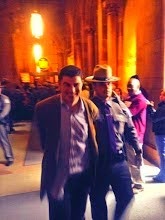
Mark Milano front and Center, ACT UP Die at the NY Public Library, 2013. He was everywhere. Here is my favorite shot if Milano at the Kavanaugh hearings, smiling, about to be arrested. 
We always stand together, he said to me, at the ACT UP NY Times Photo shoot. We stood in the middle. (Note Mel, Nanette, Tim, Mark and Larry in that pic, legends who have passed, ACTUP fight back, fight AIDS).


Jackie posted a few pics of Mark at the ACT UP meeting. 


Jamie Leo posted a note: "One the most dedicated, passionate, and generous AIDS activist and advocate has passed on ahead of us. Sending heartfelt sympathy to Mark's partner Gerry, as well as to Dean and Mark's other brothers and family. Mark is truly one-in-a-million; and those of us so inspired by his brilliance and passions (as you might imagine, i include his encyclopedic love and knowledge of puppets and the great American songbook) can only ramp up our passion and efforts in Mark's honor."

whether it was a reality or a dream, I never could entirely settle”:  New Year, Hellos and Goodbyes, From Moby Dick Marathon to Mark Milano, RIP, A Long Oral History


Midnight on New Years, I found myself dancing with Baby C, colors and lights, techno music about us, squashed into a disco, butt cheek to cheek, after chatting with friends at Barely Disfigured and Big Tiny. Just where I wanted to be, a little buzzed, looking at the year ahead, behind me, ahead, amused, a little sad, a little confused, goodbyes and hellos, greetings and regrets, old feelings and new, hopes and yearnings, weariness and excitement, ghosts and uncertainties, lingering about. The music played. New friends from the coat check there, one making out with a new friend on the dance floor. 

It’s strange to draft these first few days of the year, a goodbye to a friend, and greeting for another, au revior to Mark Milano, who I met in 1998 with ACT UP, hello Herman and his eternal Whale, a chase for oil through time, we see in our vainglorious pursuit of Venezuela

Jan 1

Woke up to conversations and plans for New Years. Some friends plunge before the inauguration, others afterward. Others are at Rockaway Beach, I’m in bed reading, messaging friends and making my way out to catch people.

First stop, Zuccotti Park, the privately owned public space that launched Occupy Wall Street, fenced off by cops, where my buddies and I welcomed the inauguration of New York City's first Muslim mayor on January 1, 2026, marking a historic first as he was sworn into office,  taking his oath on a Quran at a ceremony in the old City Hall subway station. Hoping for the best, knowing finance, insurance, real estate Albany and police unions will not be offering a welcome mat. Still, people from all over town, all over my New York, unions, new friends from Chicago, old friends from Lower East Side, and Ft Greene, from all over NYC were there, braving the cold, for this very New York moment, with Mamdani promising audacious governance and focusing on affordability. Still the concerns about open space and the push by developers to erode public space were many. Let the Parks designation stand, says one garden advocate, speaking about #elizabethstreetgarden. #saveElizabethStreetGarden

Later that afternoon, I found my way to Coney Island. 

2026 kicks off with snow squall, frigid temperatures in NYC, says the news. 

Out to Coney Island for the annual polar bear plunge, with wave after wave of intrepid swimmers. At the beach, we all disrobe to swimming trunks, braving the 22 F cold, getting pumped and braving the Atlantic, leaping into the majestic year, looking out for each other, cheering each other on, hurling ourselves into the ocean.

January 2

Lunch with John and company at Jane Street.

East to Village Works, where Mark said hi to Damian. 

Back in Brooklyn, Rob talked with me about The Wanderer by Sterling Hayden

And we read Crossing Brooklyn Ferry by Walt Whitman:

“Flood-tide below me! I see you face to face!

Clouds of the west—sun there half an hour high—I see you also face to face.

Crowds of men and women attired in the usual costumes, how curious you are to me!

….

And you that shall cross from shore to shore years hence are more to me, and more in my meditations, than you might suppose.”


January 3

Woke up at 5: 30 AM, on the road for New Bedford by 6:15 AM, off to the Moby Dick Marathon, with Baby C, the teenager and a friend. 

Driving up to New England, at 9 AM, Baby C looks up from the news.

Trump captured Maduro. 

Kidnapped?

Abducted. 

My mind trails back to the long list of foreign leaders the US has taken out. 

I can’t scroll through the news. 

Not sure what's going on.

I leave a message with some friends as we drive up to New Bedford for the event. 

What the hell is going on, are we at war, I ask my friends. 

We get to New Bedford, walking through the cobble stone streets and snow, looking out at the waterfront, where the first chapters of the novel Moby Dick take place. Hundreds of people are here for the annual ritual, one part theater, another political history, literary possibility, a chorus of voices, literally hundreds of readers, through what many consider the greatest US novel, if we are not talking about Huck Finn, reading through the entire 572 pages, from epigraph to epilogue, taking in this story of intersectionality and racism, tolerance and colonization, friendship and vengeance, the domination of nature and mediation on the transcendence of nature, capitalism expanding across oceans, extrapolating on a system of commodification vs interdependence with nature. 

“Call me Ishmael,” the first reader begins, most of us sitting about a ship in the middle of the museum. People applaud as the story begins. 

“It was a queer sort of place,” says Melville. I can feel that looking at the college profs, elders, nonbinanry teenagers, hipsters, nerds sitting about with their beaten up novels, time worn, reading away. 

“The universe is finished,” says Melville.

“Better to sleep with a sober cannibal than a drunk Christian,” another reads. 

More applause. 

By Chapter four, another reads:

“Upon waking next morning about daylight, I found Queequeg’s arm thrown over me in the most loving and affectionate manner. You had almost thought I had been his wife….

My sensations were strange. Let me try to explain them. When I was a child, I well remember a somewhat similar circumstance that befell me; whether it was a reality or a dream, I never could entirely settle.”

My sensations were strange as well. 

I love the story of Queequeg, of learning from a stranger, we find here. 

During a break, I walk around the museum, taking in old formaldehyde animals, a polar bear, a huge bird, and a huge jar of sperm oil from one of the whaling trips that inspired the novel in the first place. There it is, the natural winter sperm whale oil, the value of which sent sailors around the globe, across the seas hunting whales for it. The point of the novel, these vainglorious journeys, to exploit and deplete nature, they rarely end well.

I scroll through the news. 

A violation of the sovereignty of a country, a neighbor, and a threat to do so again, says one friend. 

A few days ago I reviewed  Jeremy Varon's Our Grief is Not a Cry for War, a history of the opposition to the War on Terror, a quarter century prior.  Now another war for oil. What a mistake it was. Now, we're deposing another leader. What could possibly go wrong? 

We're gonna run Venezuela? We can't run this country, says Baby C.

"We gave three heavy-hearted cheers, and blindly plunged like fate into the Atlantic " says Melville, seeming to understand the vainglorious task at hand. 

Ahab could be Bush going to Iraq, or the current white house occupant, looking South. 

“Such a crew, so officered, seemed specially picked and packed by some infernal fatality to help him to his monomaniac revenge.”

Among many things, Melville understands this process of chasing whales is a death business:

“Yet I tell you that upon one particular voyage which I made to the Pacific, among many others we spoke thirty different ships, every one of which had had a death by a whale, some of them more than one, and three that had each lost a boat's crew. For God's sake, be economical with your lamps and candles! not a gallon you burn, but at least one drop of man's blood was spilled for it.

Sarah Schulman writes:

The US illegally invades and occupies Venezuela, kidnaps its leader, and thereby  illegally seizes control of its oil.

Ron Kuby follows:

Ah.  At least we do not have to have arguments, like with did with the US invasion of Iraq (which worked out perfectly), as to whether it was about the oil.  Trump made it very clear that this indeed was about taking another nation's oil (or "our oil" as he called it). No doubt Trumpers' takeaway will be that he is being honest.  I am quite sure that this will work out just like it did in Iraq and in (insert names of countries too numerous to list).

Checking messages, I get a note from Kate. 

Mark died. 

Noooo.

We’d known it was coming. 

He had had us all on a zoom call in November, in which he told us his cancer had come back. 

Come see me, he explained after telling us all the story of his life, his activism, of the way he found meaning in his experience, translating his pain into action.

Come see me, let's get together, he told those of us on the call. 

I love you, I told him, trying to make a time to meet for a coffee. He was not up for leaving the house. I’m in the hospital, he told me in one text. How about I drop by to say hello, I said. I’m in the hospital. Back home the next weekend, he told me he was too tired to meet, too tired to get out of bed, too tired to even watch tv.

Plain spoked and unpretentious, my mind flashed back to thousands of little conversations since I’d first met him when I moved to the city and got involved in AIDS activism in the late 1990’s, when he was a complicated star in the group, a little nerdy, a little awkward, intelligent, handsome and smart. 

In the late 1990's, Mark used to come up to the Bronx to provide hiv treatment education sessions. He invited me to so many actions, to disrupt the Trump inauguration, to chat all afternoon after we were arrested fighting to save the ACA, to stand together at the act up group photo before Larry died. I scrolled through my pictures to find  my favorite photo of Mark smiling about to be arrested protesting the confirmation of Kavanaugh, with actup heroes, the center for popular democracy. He disrupted traffic protesting the Iraq war, a speech at the Republican National Convention at Madison Square garden. So much courage. Throughout the pain of years and years with HIV, he said he found meaning in life as an activist. 


Twenty five years of arrests and conversations, oral histories and actions, friendship and fighting, I think of Mark's courage, fighting for aids drugs in Africa, direct action to stop the war, speaking for honesty, sitting for oral histories, for science, to get dr wan released, supporting women.  RIP Mark Milano, ACTUP, fighting back, fightAIDS!!!!


Thank you for your leadership and friendship. 

RIP

Friends are posting notes about Mark on facebook.

And people are still reading chapters of Moby Dick. 

Stop looking at your phone, says the teenager, as I’m writing this. 

I’m thinking about Mark, I tell them, recalling Mark’s humanity. 

“This one hurts,” he said when Keith Cylar died in 2004, recalling Keith’s fierce energy when he came into the group in the late 1980’s, staying involved with AIDS activism for the next 15 years. 

I got to know Keith in those same years I got to know Mark, before Keith shuffled off. Mark would stay on, more and more fierce, more and more engaged with the years, friendly to people in the Bronx when he did HIV/AIDS treatment education workshops at the housing, harm reduction and aids services programs i was involved with as a social worker, helping everyone understand the complicated lessons of triple combination therapy, as opposed to monotherapy, after the advent of highly active antiretroviral therapy. 

He was also a skeptic, with little interest in dogma. He’d say the unpopular things, looking at the opposite side of issues, opposed to groupthink.  That did not make him popular.

I don’t remember exactly when I met him, but he joined us on an action we were organizing with members of Fed Up Queers and Lower East Side Collective in the spring of 1999. There were difficult moments. He could be prickly and angry, aggressive and intolerant. But he also came around, asking me to help him with a magazine story he was editing, very friendly and engaged. 

I saw him disrupting Al Gore that summer of 1999, becoming a part of Healthgap, fighting for global HIV access. When ACT UP was less popular, he organized an action with Laurie Wen to help get the word out about a Chinese scientist, named Dr Wan  Yanhai. He had been a whistle blower about HIV going into the general blood stream of people with HIV in China. They detained him. So we organized a demo at the Chinese Embassy, trying to get the word out to the world. And Dr Wan was later released. It was  one of the greatest activist wins I’d ever seen. 

When his insurance company denied his claim for cancer treatment, he put of the world for us all to stage a mass civil disobedience.  Everyone in ACT UP, the Rude Mechanical Orchestra were there, playing the Death Star theme from Star Wars. The day before his insurance company approved his claim, but he still did the action. He always did the action, suing a doctor who’d been homophobic and aids phobic and winning, zapping George Bush at the RNC, Al Gore when he was announcing his run for president. I recall Tommy Tompson, the Bush Health and Human Services Secretary, coming to town. We were going to zap him, but he apparently he got wind of our action. “Where is Tommy Thompson?" screamed Mark, before our disrupting crown was kicked out.


September 2016, I joined Milano and ACT UP to denounce Mylan and a pattern of price gauging that has become all too common. Mark Milano explained, “We are here because of the dramatic increase in the cost of the EpiPen, from $50 to $600 dollars per pill.  Martin Shkreli is not an outlier.  Drug companies push up prices and congress does nothing because pharma owns them. This does not just affect People with AIDS.  It affects everyone. These prices could bankrupt Medicare!  Shame on every pharmaceutical company that is overcharging!”

 “Drop the price now Heather! Drop the price now!”

“Release the drugs Heather!”

As we were chanting, Mark Milano and several other activists tried to enter the building.

But we were locked out.

“You have to pay $600.00,” one of the activists laughed.

“We are here from ACT UP and VOCAL to protest price gauging,” Milano explained just outside the Chrysler Building.  “This is but one example,” he continued, offering examples from Gilead for their hepatitis C drug, etc.  “It is not just Mylan.  These companies see a chance to rack up profits.  “HIV medications can cost up to $30,000 a year for one person.  But they cost $50.00 abroad.  These companies are profiting on our backs.”

Standing in front of a piñata of an EpiPen, Milano took a swing, watching money fall out.

This is how they see EpiPen, as money, Milano continued.  

“People over profits, Drop the price now!” screamed the crowd.

“This is getting serious folks,” he said when the Republicans started voting to repeal the ACA, holding a cough in at a fancy restaurant at Trump hotel on Jan 15, 2017. I joined him for Trump’s inauguration disruption in 2017, Zap after zap, in DC, to defend the ACA, oppose Kavanaugh, etc. I saw him everywhere. Later we talked all afternoon, unpacking what had happened, the friends and struggles of his years in activism.

Summer 2018, he sat for an interview for my Activism Friendship and Fighting book, telling me about his work with ACT UP and Rise and Resist, differentiating between good fights and bad, railing about the cool kids club, a vanguard that seems to accompany all social movements. Fun if you are part of it, but all too often one is not (see my interview with Milano below).  He lived with a lot of shame, a lot of rejection.  He knew the science, but did not fit into the T and D gang in ACT UP. He always felt like he was on the outside, railing about the public funeral for Larry Kramer and the private one, only those in the know were invited to attend. July 2023, we had a long conversation about this on facebook:


“I’m just trying to understand how virtually everyone I know in ACT UP was invited, while I was excluded.I know I was never popular but this seems cruel, especially this response” said Milano.

 I wrote:

“I understand it feels like a snub. We talked about this in that interview we did. Feels like a rehash of an old injury.

“Yep. I’m definitely unpopular in ACT UP.”

On that call in November, Milano talked about understanding Trauma, trying to make sense of the ways he was triggered, the ways his life was impacted and he responded. 

Running from a blockade of a natural gas pipeline in Williamsburg in the winter of 2020, I joined ACT UP for a photo for the New York Times, standing with Milano. We always stand together, he said to me. (Note Mel, Nanette, Tim, Mark and Larry in that pic, legends who have passed, ACTUP fight back, fight AIDS).

When the pandemic hit, I stopped seeing Mark as much, only running into him periodically at demos. We’d always talk. At the Rally to End the Pandemic Everywhere in July 2021, we walked back to Grand Central. He wondered if what we were doing was effective, if sit ins or holding signs was enough. 

More and more when I saw Milano, he looked tired or as if he was sick again. I ran into him at a demo when we got back from Berlin in August 2023, joining health care advocates at 12 noon outside the NYC office of Jones Day 250 Vesey Street (at Hudson River) in Lower Manhattan.

“This is not going to stand,” said Mark Milano, talking about the personal impact of increased drug costs.

The last time I saw him in person was at the reading for our book on friendship, trying to make sense of the fighting, the wounds, as well as efforts at understanding and repair at the Center. He helped organize a service for Nanette, of ACT UP, that took place just after the reading at the Center, speaking about the need for care, the need to remember activists and what they’d offered, speaking for Nanette, as well as it seemed, for himself. 

He was a part of a lot of memorials, singing and paying tribute. 

 I recall him saying goodbye to Andy Velez, in October 2019, recalling Andy V

Telling it to ACT UP.

Laughing.

And then a tribute to a friend,

As only Judy could, singing

“You're Nearer."

As she did in 1961:


“You're nearer, than my head is to my pillow

Nearer, than the wind is to the willow

Dearer, than the rain is to the earth below

Precious as the sun to the things that grow

You're nearer, than the ivy to the wall is

Nearer, than the winter to the fall is

Leave me, but when you're away, you'll know

You're nearer, for I love you so!”


After that reading and the Nanette's service last March, I had a feeling Milano was slowing. 

Still, he shared his memories, opening the floor for a conversation. 


All these actions flashed through my mind as readers made their way through Moby Dick

By 11: 30 PM, after nearly a dozen hours of the book, I retreated for a few hours of sleep. 


Jan 4

Back to the Moby Dick Marathon the next morning, back to lots of feelings,  I left at chapter 53, to make my way to 110 Middle Street, Fairhaven, at 1145 PM, up and awake at 530 am, returning, the teenager and crowd the midway through my favorite chapter of the book, 94, squeeze the hand. 

Others in the room had not left this metaphysical journey of the whaler, his mind and the universe, a writer observing himself, pursuing the leviathan, across the globe.

And we kept on reading the final chapters.

At 7: 48 am, 19 plus hours  into the mobydick marathon, we finished chapter 102, about a sailor tattooing his body with a poem and measurements of the whale.  

Different readers, actors, performers, one man read in brail, reminding us the whale transcends time as he finished chapter 105.

Midway through chapter 108, reader 209, p. 458, I look about, noticing its snowing in New Bedford. Videos show maduro being captured.

"its an ill voyage... make a fair wind of it homeward, to go on a better voyage than this..." says Starbuck. 

"There are certain queer times and occasions in this strange mixed affair we call life when a man takes this whole universe for a vast practical joke," wrote Melville.

“Were this world an endless plain, and by sailing eastward we could forever reach new distances, and discover sights more sweet and strange than any Cyclades or Islands of King Solomon, then there were promise in the voyage. But in pursuit of those far mysteries we dream of, or in tormented chase of the demon phantom that, some time or other, swims before all human hearts; while chasing such over this round globe, they either lead us on in barren mazes or midway leave us whelmed.”

 'It's my 22nd,' said the docent, speaking of her many Moby Dickathons.

And with that, the crew followed vengeful Ahab toward their own demise.

"I see a madman begetting other madmen..."  says  Starbuck. Despite his warnings and premonitions, the crew of the Pequad chases the whale for days before Moby Dick stops toying with them, chasing them for a day, breaching the water, flying into the air, and crushing the Pequad, reminding us you cant beat nature. The audience, many of whom had been there for 26 hours, roared.

 'I hope this brings you lots of sustenance’ says another docent, bidding us adieu. ‘We're off to our own whaling journey in 2026. Hopefully there are lots of books and museum visits.' 

Says Phillip Hoare: "Subversive, queer and terrifyingly relevant…The book features gay marriage, hits out at slavery and imperialism and predicts the climate crisis –” 206 “years after the birth of its author, Herman Melville, it has never been more important..." 

Caroline drives us home, stopping for a snack as the sun makes its way down. 

I scroll through my news feed, more posts about Mark. 

Kate Barnart, who worked with Mark for decades, woke up with what she would call, “a sadness hangover”.. “brain full of fog, and forced my reluctant body through the motions of a morning while impatient cats swirled around my ankles. Yesterday’s double dose of grief – the loss of Mark on what would have been my mother’s 83rd birthday – and the horror of the attack on Venezuela are weighing me down.”

MaryEllen recalled inauguration day 2017,

“Mark was an amazing activist who gave me the best advice, seconds before we jumped up and disrupted the 2016 inauguration: "courage".

1/20/2017 was the day of my first (best and favorite) act of civil disobedience. And it was only possible because Mark asked me to join him the night before

I learned sooo much from Mark before, during, and after that action: where to sit, how to get to the best spot, what to do while waiting, how to blend in, how to not look suspicious, the importance of rehearsing, consistently thinking strategically, and how to be courageous in the face of tremendous fear

The fabulous sounds of our whistles and disruption are part of that (awful) historic moment when the worst president ever, took the oath of office. (Google "oath of office 2017 inauguration", watch the video on any news channel, and you'll hear us on his first syllable - link in the reply)”


Paul Davis wrote:

“Lynda Dee is right to tag Mark as a“Force of nature”. Sad, angry, and HINeslty in denial. Losing Mark, a true always-there movement backbone, is somehow unimaginable, even as it is also a huge loss to the world and to the causes Mark so fiercely supported. Mark lived fully and gave generously of himself, and I am richer for my time with him on the streets, in countless meetings and conference calls, in jail cells and police vans.”


Andy Humm wrote:

Indefatigable gay and AIDS activist Mark Milano has died. Lived with HIV since 1981 and fought every step of the way to survive and to help not just other people with HIV to survive but to guarantee health care for all. Rest in power, Mark. Deepest condolences to his love of 23 years, Gerry Valero, pictured below at the HANDS OFF action this past April. (Mark wrote, "Still recovering from my kidney transplant so I only made it 6 blocks, but we were there!") The Newsday cover features Mark (in light blue shirt and ACT UP t-shirt at left) protesting the murder of Matthew Shepard in 1998. (We will pay tribute to Mark on this week's GAY USA with video of his 1994 interview with us about the founding of the AIDS Cure Project.)


Sharonann Lynch wrote:

Mark Milano, Rest in Power.

Working with Mark on global AIDS activism I came to rely on his intensity, impatience, and insistence on change.  He was agitated at injustice and fierce and fearless in confronting it.

My heart is with Gerry and all of Mark's family and friends. ACT UP. Fight Back. Fight AIDS.


Sharonann posted Mark’s recollection of their action in Tennessee:


In his own words: Mark Milano, on the 1999 action in Carthage Tennessee.

Here's my personal account of the Tennessee action.

Mark

On a Sunday afternoon in June of 1999, I got a phone call about a meeting being held that night to plan a “party.” As a veteran of numerous AIDS protests with ACT UP /N Y, I knew that meant an action was taking shape, but I had no idea that this meeting and the subsequent actions would reshape the nature of my activism and would play an important part in changing the way the U.S. responded to the global AIDS crisis.

Prior to that night, I had never worked on global AIDS issues. First, we had plenty of problems right here at home (and still do): overly expensive drugs that led some states to restrict access; a continuing epidemic among my fellow gay men; a president who talked a good line about “feeling our pain” but did little to stop it (he barred the use of federal funds for needle exchange programs); and to top it all off, a real burn-out problem among AIDS activists.

And second, the problem of AIDS around the world was just too big for a simple activist to grapple with. When you looked at the enormity and complexity of the problem, where could an activist start? There was only one thing many of us were “sure” of: we could never get HIV drugs to the countries that needed them the most. They were just too expensive: over $10,000 a year. Well, that’s how much they charged here in the U.S. – we could never find out how much they actually cost to make, since that information was fiercely guarded by the drug companies. But we thought (wrongly) they must cost many hundreds of dollars a year, far out of the reach of countries that spend only a few dollars a year on health care per person.

So I was surprised to find that the action being planned was about getting HIV treatment to Africa. Activists had gotten hold of a leaked State Department document detailing how the U.S. was working to prevent cheaper HIV drugs from being used in South Africa. Here was the deal: in 1997, South Africa had passed the Medicines and Related Substances Control Act, authorizing “compulsory licensing” and “parallel importing” to make or import far cheaper versions of HIV drugs. But the drug companies were not happy – they wanted South Africa to continue to buy drugs directly from them, not import them from other countries or make cheaper generic versions. Of course, virtually no one in Africa could afford the drugs at full price, and without them, millions would die.

According to Jamie Love from the Consumer Project on Technology, the U.S., under pressure from the drug companies, had put South Africa on its “301 Trade Watch” list, a warning signal that trade sanctions could follow. Ironically, our government was threatening to restore the trade sanctions that had been lifted in 1993 when apartheid had ended! In addition, South Africa had been kicked off the list of countries that had been promised debt cancellation. Clearly, there was serious outside pressure toprevent this nation from doing what was needed to save its own citizens.

But efforts to publicize this problem had met a dead end. AIDS in Africa, compulsory licensing, generic drugs, the 301 Trade Watch list – who could wrap their head around any of this, much less pitch it to reporters on tight deadlines who knew nothing about the issue? A year of work on the story had led to only one article, in the Chicago Tribune. Beyond that, nothing. The Washington Post had been promising an article for months, but it never seemed to materialize.

So members of ACT UP/NY and F.U.Q. (Fed Up Queers) called a meeting to do a “zap” (a surprise protest) that would finally get the issue into the papers. The target? Al Gore. My first thought was, “Wait a minute – do I want to do anything to damage the man who I desperately want to defeat George Bush?” But then I heard that Gore had been personally involved in talks with South Africa’s then Vice President, Thabo Mbeki, as part of “an assiduous, concerted effort” to “repeal the Medicines Act,” according to the leaked document. Turned out one of Gore’s closest campaign advisors was Anthony Podesta, a top lobbyist for the pharmaceutical industry. So I knew we had the right target. He was concerned about how he looked on the AIDS issue, and I was sure that a zap in June of 1999 would have little effect on an election in November of 2000.

Gore was announcing his candidacy in Carthage, Tennessee, that Wednesday and again the next day in New York City. Of course, a zap in NYC would be a lot easier, but some of us argued that if his first announcement was in Carthage, that’s where the cameras would be. So we rented a van and headed to Tennessee, while ACT UP/Philly started working the phones to prep the media. We had called to see if tickets were needed for the event, and were told they weren’t. But when we arrived at 7 a.m., we found out that those without tickets would be about a block away from the stage – not what people had just driven 16 hours for! I surveyed the ticket-takers, and chose the sweetest-looking grandma there. “Hi! We just drove 16 hours from New York City to cheer Al, but we don’t have tickets! Is there any way we can get in?” She took one look at our “Columbia Students for Gore” t-shirts and said, “Well, sure! Y’all come on in!” We walked right up to the front and positioned ourselves directly between Al and the cameras.

Gore was not scheduled to speak until 11, so we passed the hours making friends with the Tennessee Democrats all around us – some of the friendliest people you could hope to meet. We talked about all the things we mutually held dear, all the while feeling guilty about what we were planning to do to their favorite son. Finally, the event began – country music, speakers, Gore’s daughter, and then the man himself. I had volunteered to blow the first whistle to kick off the action. Al started talking: about women’s rights (couldn’t disrupt there); about voting rights for blacks (no, not there); about immigrant rights (not yet); and then about “stronger families.” Okay, close enough to “family values” for me – I got up on a fence, ripped off my tshirt to reveal one that said “GORE’S GREED KILLS” and blew my whistle.

All hell broke loose. We began chanting, “Gore is killing Africans – AIDS drugs now!” One of the women we had been chatting with for hours turned to us with tears in her eyes: “I can’t believe you’re a part of this!” Others became violent, chipping one woman’s tooth by pulling out her whistle; punching the only other man in our group in the jaw. But mostly they just tried to drown us out, making far more noise than the 12 of us could ever hope to make. The cameras focused on us immediately, and I could see Gore was furious. He attempted a feeble, “I love free speech!” and then forged ahead, actually announcing his candidacy during our protest.

The media reaction was immediate. Suddenly, our issue was news. Why was Al Gore blocking AIDS drugs? Why was the U.S. bullying South Africa? What was parallel importing? The Washington Post ran its promised article the next day, and we kept up the pressure. Seeing the success of our zap, members of ACT UP /Philly raced to New Hampshire that same day and were able to hold a banner reading “A IDS Drugs for Africa” not two feetbehind Gore as he spoke. Inspired by their action, we hurried back to NYC and hit him again the next morning on Wall St. When he came onstage, he looked me right in the eye – I’m sure he recognized me. I smiled as if to say, “Hi, Al, here I am again,” and blew my whistle.

We continued to hit Gore fundraisers, and soon our zaps became the story, not his candidacy – a disaster for his campaign. More importantly, people began writing about the possibility of actually providing generic HIV drugs to people in poor countries.

On September 17, after months of zaps and meeting with officials, the U.S. changed its policy toward South Africa. And in May of 2000, after continued pressure (including taking over the offices of the USTR), Bill Clinton expanded the policy to all nations, issuing an Executive Order that “...the United States will henceforward implement its health care and trade policies in a manner that ensures that people in the poorest countries won’t have to go without medicine they so desperately need.”

Al Gore would later break with Podesta and come out forcefully against the pharmaceutical industry, and after leaving office Bill Clinton would work to lower the cost of triple-drug HIV therapy to $130 a year. George Bush would renew Clinton’s Executive Order and even create a program to deliver generic HIV drugs to people in 15 developing nations. And in 2006, the majority of sessions at the International AIDS Conference would focus on the nuts and bolts of delivering HIV treatment to developing nations – not whether or not we could do it.

But on that day in Carthage, there were only a handful of us saying what is now universally accepted: generic drugs are the only hope we have to save the lives of millions of people around the world. I don’t want to give us too much credit, as many others have fought long and hard on this issue, but when I think of those early zaps I’m reminded of what Margaret Mead once said: “Never doubt that a small group of thoughtful, committed citizens can change the world. Indeed, it’s the only thing that ever has.”


Writing this blog, recalling Mark, Ivy invited me to ACT UP’s Monday meeting:


“Dear comrades, 

ACT UP New York has met every Monday since 1987. Tonight, January 5, is our first meeting of 2026. We will open by honoring Mark Milano Please join us to pay homage to our fierce, beloved comrade. This will be the first item on our agenda. Many of those attending are newer members, and it feels especially important to hold this moment together. ACT UP was not just an organization to Mark—it was home, it was purpose, it was love. We gather in that legacy. ACT UP NY's first general body meeting of the new year is tonight night ( Jan 5,2026 ) at 7pm on zoom.”


I joined, recalling a few moments, leading the group in the collective chant, ACT UP, fight back, fight AIDS.


And dug up that old interview transcript with Mark after the Kavanaugh hearings

BS: Talk with Mark. Mark Milano, so, should we say Mark Milano on the tape? Okay. Now there's a couple of the embarrassing date and place of birth...

Interview August 2018 

MM: I was born in Milwaukee, WI on April 28, 1956. 

BS: April 28th... 1956... When we were -- I'm going to start in the present and go backward -- when we were getting out of having fun at the president's inauguration, we were eating a hamburger and you said, "One of the reasons I do this is because, as a person with HIV, this gives my life meaning." What were you meaning there? Tell me about that day, that moment. What goes through your mind? 

MM: So what happened to me was I was diagnosed with AIDS in '82 and I ended up near death in the hospital in Chicago in '85. There was a night when it looked very bad. Like I was going to die. And I considered -- my boyfriend was a big druggie and had a lot of drug connections, and I knew he could get me stuff to kill myself. So I was considering that. And when you actually go through that scenario, you picture yourself taking the pills and the end, and it's amazing how, when it's very real, you're facing this big empty black pit, you know? It's like nothingness. I'm going to cease, possibly cease to exist. Very frightening. And that leads you to look back on your life. And I looked back on my life and I was filled with regret. Because the only person I had really been concerned about in my whole life was me. It was all about my film career. I was trying to get into film production. I was working at Loyola University in the video department and I was completely apolitical. I realized that if I died then -- at that point I was I think 29 years old -- that my life would have been wasted. I had spent all this time just trying to get into film and had been doing crappy work and -- no, I actually wasn't working at Loyola at that time. I was working at Optimist, which was a commercial film editing office. I was making television commercials.

 BS: In Chicago?

 MM: Yeah. And I was working my ass off to make like McDonald's commercials and actually overseas cigarette commercials and the work was incredibly brutal. 18 hour days. The pressure was intense. And I thought, "What am I doing here? My life has been wasted." So I made a decision that, if I survived this, I would change things. When I got better, I quit my job. I bought a one-way plane ticket to New York. And actually my plan then was to come to NY and get into film production, because I'd been working in film editing and I wanted to be in production and I thought, "Well I can become a director of photography or film director and make -- " 

BS: How did you get better? What happened at that point?

MM: We diagnosed what I actually had -- it was not AIDS, even though my HIV status was confirmed then -- what I actually had was not AIDS-related. Or not really. It was something called sarcoidosis. I'd lost 30 pounds and been very sick and they were --

BS: Sarco...

MM: Sarcoidosis. Autoimmune disorder. Unrelated to AIDS, but probably related to my HIV infection, though it's very confusing. Anyway, the reason I thought I was going to die was because I had been sick for a year and I was extremely ill in the hospital and I told them to tell me every time they had an idea because I wanted to know what I had. So they would come in every day with more crazy ideas. Toxoplasmosism, MAI... brain cancer... so one after the other they were throwing these really horrible diagnoses at me, so finally I said, "Okay, new plan, don't tell me your guesses. Tell me when you have a diagnosis. I don't want to hear anymore guesses because these are really frightening." It was after one of these nights when they had thrown all these horrible things at me and I was laying there at midnight, and the phones were cut off at 10, you couldn't call anybody. So I was laying awake in bed thinking, "Oh my god, I'm going to die." When they actually came to and said, "Okay. You either have TB of your lymphatic system or you have sarcoidosis. And if you have the TB and we give you -- the treatment for sarco is prednisone -- if you have TB and we give it to you, it'll kill you. If you have sarco, it'll make it better. What do you want to do?" They didn't want to give me the prednisone because they didn't want to take that risk and I said, "Give me the prednisone." And they gave me the prednisone and within ten minutes I was totally well. It was so bizarre. I gained all the weight back. I gained eight pounds in one day. They weighed me every morning. So that was miraculous and that was wonderful. I've been managing the sarcoidosis since then. It's a chronic condition. I'm still on the prednisone after all these years. So that really was a new lease on life. I could change things. I wanted to get out of Chicago. I came to NY to change my life and once I got to NY, my doctors in Chicago called me to say, "Your CD4 count has dropped to 120." So that's pretty scary. I didn't actually at the time know how bad that was because I was pretty much uninformed but I knew it wasn't good.

BS: 120? Yeah.

MM: Yeah, not good.

BS: Just hearing the word 'dropping' isn't good.

MM: Exactly. So I began calling to find out what clinical trials were going on because this was back in June of '87 that I moved her. The CD4 count came in the fall of '87. So this is very early. The only drug that had been approved was AZT at the time and I didn't like what I'd been hearing about the drug. I wanted to find out what was going on and I called up the [muffled] hotline and they said, "We don't know. Ask the doctor," and I made an appointment at Sloan Kettering and he came in and said, you know, "You don't qualify for any of our trials because of your sarcoidosis" and blah blah blah. Spoke to me for like five minutes. Sent me a bill for $200, which I never paid because I was so angry [laughs]. I happened into an ACT UP meeting and this is actually all -- you should listen to or look at my transcript, oral history project. It's all in there. I checked on the ACT UP meeting and it was just too crazy for me. The whole story is in the oral history project. It's a pretty funny story, but I don't want to go through all this again. So I didn't come back and then when I was looking for the trial, I heard that ACT UP was putting together a directory of clinical trials and I said, "Oh, let me get involved with that," and I got involved with Michael Cowing. He was in charge of the project, which was really hitting a brick wall. They couldn't get the information. Once again the story is in the oral history project, but me and another woman managed to get all the information we needed and we put out the first clinical trials directory. And what I found when I found all these trials was that there was nothing for me. Even all the trials in NY state, there was nothing for me. But luckily my CD4 count had bounced back up. I was up in the 300s, just on its own. So there wasn't as much of a need. But, I got involved with the clinical trials project. Through that, I learned everything there was to know about it. And I borrowed a philosophy -- I think it was F. Scott Fitzgerald who said something like -- you can look it up -- "the definition of intelligence is being able to hold two conflicting thoughts in your head at the same time." And the two conflicting thoughts that I had to hold in my head -- and you had to do this in the 80s -- was one: I will never die from AIDS and two, I could die from AIDS so I should know everything there is to know about it.

BS: Two conflicting ideas. 

MM: Yes, and I had to have both. Taking my HIV meds right now, as we speak.

BS: With hot chocolate. Do you want some water?

MM: So I learned everything about -- because there were various clinical trials for all the various [muffled] against infections, right? And I had to learn about all of them to write up these clinical trial summaries. So I learned about these horrible, horrible illnesses that everybody was getting and began self-educating myself when it came to HIV and I became extremely well informed. But it was very frustrating in ACT UP in that, even though I became an expert, or I became very expert on HIV treatment and all the illnesses that go along with it, unless you were one of the stars of ACT UP, you really couldn't have a voice there. And you know who the stars were. Peter Staley [?], Mark Harrington, Greg... there were about 8 or 9 of them and they were pretty much worshipped by everyone in ACT UP. I don't know if you remember then, but they were the elite. Treatment and data. Which I went to every treatment and data meeting and tried to speak but was pretty much dismissed all the time when I spoke. And I really felt like... I'm an intelligent guy. I've learned a lot about this disease and yet I can't seem to have any effect. And many of my ideas -- I was one of the "out 100" back in the 90s because Anne-Christine d'Adesky nominated me and she nominated me as a "principaled naysayer," which I am to this day. I often have an opposing idea. I'm not afraid to say. And every time I'd say an opposing idea at Treatment and Data, I would just be dismissed. Like, the whole countdown 18 months project to find... not a cure, but effective treatments for all the OI's within 18 months just seemed to me absurd. And of course in the end, it did [muffled] -- 

BS: And the people that I know from that period that were lucky enough to survive, some of them just died and it was horrible, they couldn't do anything about it, but some of them, they didn't take the treatments. Some of the people I know they just didn't join the cure of the month club. Cause it will kill you.

MM: And I didn't either, because my CD4 count hovered around 300 all the time and so I wasn't -- in fact, I had a big fight with my doctor at the time because when the FDA approved AZT for anyone below 500 in '89, he wanted me to go on AZT and I was very skeptical because a) I knew how toxic it was and b) I knew that monotherapy led to resistance in virtually everybody and I said, "Okay, well okay, I'll do it but at the lowest dose that has shown effectiveness," and that's 300 mg and he said, "I won't prescribe it at that dose." And I said, "You can prescribe it at the full dose and I can take a half dose." So we got into a shouting match actually and I found a new doctor. There was this tremendous pressure to go on AZT monotherapy and I never did.

BS: Why do you think there was that pressure? 

MM: Because people felt you should do something. And the fact of the matter is, people were dying left and right and so they were saying, "Don't die, do something," and I remember people came to me in ACT UP right before they slipped below 500 and said, "I have to go on something immediately," and I said "You know, I don't think -- " I was a long-time proponent of delaying treatment until you really have to have it. And now I'm not because now the drugs are so much better. 

BS: Yeah they work

MM: And they're not toxic so you can do them. 

BS: What were the side effects at that point? I knew people, women I knew, who took huge doses -- as big as guys, there was no difference, but women's bodies are so different.

MM: When AZT was first prescribed in '87 it was five times a day. Because, it was literally like being on chemotherapy -- it is a chemotherapy drug -- so being on it permanently, so that was horrible. Then they cut it down to twice a day, so the dose was much more tolerable, but still toxic in many people, and the most important with any kind of monotherapy is that it lasts six months to a year at best and then your virus is completely resistant and the drug is worthless. We had a good idea of that back then. Now, the thing is, I know now, because I had my blood frozen all through the 1980s that my viral load all that time was extremely low. So there was no need to go on these drugs, so I was right, instinctively. We know that is the case because you've heard about the delta-32 mutation that prevents HIV infections?

BS: No.

 MM: If you get it from both parents, you basically cannot get HIV. If you get it from one parent, you can get HIV but it will progress much more slowly. So I found out that I had that mutation from one parent and that's why my disease progressed so slowly. I also think the prednisone because it's a wonderful anti-inflammatory and we know now that anti-inflammatories are very good for HIV also delayed the progressions. So I think I was right in delaying treatment. But, we'll get back to ACT UP cause you're looking at your watch and I know you want to get to -- what time do you have to leave by? 

BS: Oh, like 45 minutes. It's okay.

MM: Okay, so I want to get to the relationships in ACT UP. So it was very frustrating because, though ACT UP was this groundbreaking, treatment-oriented advocacy organization, it was also -- and I'm sure you've heard this many times -- it was high school. Have you heard that before?

BS: I've heard vague references but --

MM: It was totally high school. It was all cliques. It was who are the cool kids and who are not. Who was popular. Who was cute. I really hated the idea of the ACT UP swim team, all the guys who were just drooling over who was the cutest guy in the room... So there was all this other dynamic, apart from the activism, about who was in and who was not, and who was hot and who was not. And I was always a total nerd. All through high school and even at this point, I had gotten in shape and I was much better looking and I didn't present physically as a nerd anymore, but socially I was very awkward and inept and could not get into the cliques, so I could never connect with any of these people socially, and if you couldn't connect socially, then you didn't really connect as activists. So here I was doing my thing with the clinical trial directory, going to T and D meetings, but not really having much of an impact. And especially because I refused to follow the party line. I was talking about this -- a number of us just got back from DC. We were in court for disrupting the Senate vote on the tax bill and there were four of us in the car on the way back and we had good conversations about how [muffled 19:20] progressive organizations are, like in that "You must agree on every issue, a, b, c, and down the line and if you take a stand that in any way deviates from the accepted stand, you could be ostracized." Which I think is horrible. And I'm sure in this immigration case, if you bring up his wire fraud conviction, you will get people saying, "That's not the issue here; he served his time, don't talk about that." And there were a number of issues in ACT UP that you were not allowed to disagree on. So I'll give you a couple examples -- 

BS: And I've seen that in my activism. God forbid you disagree with the Bernie bros. And I love Bernie, but I was like, "Oh I actually do a want a woman," and then that became a shit storm.

MM: I mean, I wanted a woman, I voted for her. I wanted a different woman, but --

BS: Exactly.

MM: I kept saying to people, "Look, the choice is clear. Hillary is the status quo. Hillary is mainstream, centrist, Democratic period, don't pretend she's anything else. You have a choice between the status quo and the apocalypse. These are your two choices. I know we hate the status quo, but if you don't vote for her, I mean if you don't vote for Hillary and you just stay home, you are enabling the apocalypse." And that's obviously what we have. That was a choice. It was clear. You have to take the lesser of two evils.

BS: So with ACT UP -- I mean I've had those issues too. Some years you're in, some years you're out. It's like where are you at with harm reduction? Where are at with this, where are you at with that?

MM: And are you allowed to present opposing views without being ostracized?

BS: And that's my question. In activism, there are moments you can have a good fight or a bad fight --

MM: Good fights are important.

BS: Yeah. Tell me about a good fight. What's a good fight?

MM: A good fight... There were good fights working on the clinical trials directory. How to present the information. We were taking a 200 page protocol and summarizing it in one page, because the goal was for anybody with HIV to open that book and say, "I"m looking for a trial for this condition," to find that trial, read the page, understand what it was enough to make a phone call. So over the years, we kept debating and revising and improving the directory so that it was more and more usable and every time a new issue came out, there were more things in there to make it better. However, the board -- we formed a group called AIDS [muffled 22:20] and resources to put up the directory, we got funding from the state to do the directory and there were like 5 or 6 of us [muffled 22:26] it was really great. A wonderful place. However the board was not what a board traditionally is. A board traditionally is rich people who have connections to rich people who can bring money in, right? Our board was all people from ACT UP and they were some of the most -- a couple of them -- were horrendous. And two of them in particular actually had the frame of mind that "you have to do it my way and if you won't do it my way, you're not gonna do anything," and they would block everything. So these two people actually blocked so much stuff that ATR eventually went out of business because their attitude was not, "I'm going to compromise or I'm going to give in sometimes," it was like "You're going to do it my way or I'm going to block anything you do." Which is terrible. The whole reason America exists is because at the founding of the country, people were willing to compromise. Compromise is not a bad word. It's a great word. And some Republicans in Congress, like the Freedom Caucus saying, "We refuse to compromise," and they've literally said that. That's going against everything America stands for. America is founded on compromise. So many people in ACT UP refuse to compromise or even discuss. I'll give you two examples. Tony [R]. You remember Tony? 

BS: I wouldn't say -- just quickly -- there's a good fight vs. a bad fight. A good fight, in my mind, is you learn, you battle each other, you heard the other person and maybe you come to a better relationship --

MM: Or, the important thing is, a good fight -- and this has happened many times -- when I have an idea, at Rise and Resist a few weeks ago, we were debating one of two signs for a march. One sign was "Medicare for All" and the other sign was "Universal Health Care for All" and we were only going to use one or the other. We weren't going to use both, for various. So I got up and happily argued for Medicare for All because I wanted to get behind Bernie Sanders. Another guy got up and argued for Universal Health Care for All and so when we voted, his sign won. So at that point I say, and I always said this, "I lost." They voted overwhelming for using his sign going forward. There have been many times in activist work when my ideas have been voted and I always abide by the vote. Many other activists say, "I'm leaving." It happens all the time. It's not the way it works. It's a fair vote. The way a good fight is, each side presents their idea and you vote on it and whoever wins, that's the wonderful town hall democracies of ACT UP and Rise and Resist. You come to a decision together. If a decision is so horrible you can't be involved with the group anymore, okay. That's pretty rare. It's generally more "I didn't get my way" even though the difference between Medicare for all and Universal... it's minimal. But people leave over things like that. You know? Which is just stupid. So that's a good fight. Allowing dissenting views, hashing it out together. Coming to a vote, and then accepting the conclusion, whether or lost or whether you won.

BS: And a bad fight?

MM: So Tony, you remember him?

BS: No, I don't.

MM: Longtime activist member who... he had a big crush on me. He followed me around like a puppy dog for years. Unfortunately, I was not into him. I wish I had been, but I wasn't. But he made it very clear that he was very enamored of me. So we were friends and whatever and then one time a few of us were out for coffee and we were having a discussion about what to do with -- back in the late 80s -- people who knowingly infect others. Because I had been counseling a number of women with HIV, largely African American women, who had been knowingly infected by their partners. The boyfriend knew they had HIV. And not only were they infected, but they knew of other women this person had infected. They had tried to do something to stop a woman and they were basically told there's nothing you can do in NY state. And they were very frustrated that they knew this guy was out there infecting women without telling them, infecting numbers of women, and their hands were tied. Of course, the party line in ACT UP is "That person is untouchable. It's everyone's responsibility. You have to protect yourself. You cannot criminalize a person with HIV." And I agree with that. But the point I made at this discussion was "But I'm not sure if this guy could be untouchable. I'm not exactly sure what we should do about it. I'm not sure if you'd take him to trial. I don't think you should pass a law. I don't know what we could do about it but I don't think we should do absolutely nothing. I'm not comfortable with saying 'This guy can infect whoever he wants and we're not going to do anything about it.'" And just, in not even saying what I wanted to do, but just saying I didn't want to do nothing, Tony never spoke to me again after that. That was it. It was done. He couldn't believe I would dare say that and no more discussion, no more friendship. Period. That's crazy. Because I don't think what I said was that horrible. If I had said, "He should be locked up. Take him to trial and lock him up," that would be different. I just said, "I don't completely agree with the ACT UP party line." The other major thing that happened between me and [name? 29:16.5], which destroyed our friendship for many years was the sex club problem. I'm trying to think of the time frame, you might want to look it up.

BS: '95.

MM: Was it '95? '94, '95? First of all, it started with NBC in NY took a hidden camera into the Bijou on e 4th street and did an undercover investigation of this gay sex club. And that had largely been closed down in the mid-80s, but a number of them were still working, and this exposed there were some still there. So Guiliani was on a tear to shut down all the sex clubs. So of course the ACT UP party line was "Hands off our sex clubs, we can do whatever we want. You have no right to tell us how or when and where we can have sex." So I'm always a fan of compromise and I said, "Let's come up with a compromise." So I actually contacted all the sex club owners. It was very hard to do because these are very anonymous people. And I got 30 of them in a room together. They all knew they were in danger of being shut down. We crafted an agreement together that the basic thing -- there was one basic thing -- we would not allow fucking without a condom in our clubs. That was it. If you're in our club, you're in my club, my commercial establishment, if you want to fuck, you have to use a condom. And we proposed lifeguards that would actually be sexy guys in lifeguard uniforms -- because some clubs had those by the way -- like the NY Jacks that only allows masturbation that had lifeguards, they called them "monitors," and if they saw someone giving head, they would say, "You, out," because there was a sign when you went to the club "No lips below the hips, if you are found doing anything besides masturbation, you will be ejected from the club." So you knew, from the start, if you tried anything, no second warning, no three strikes, if you're caught, boom. And nobody wants to go because you haven't come yet, so nobody wants to go home yet, right? So the rule was very rarely broken, but they did have monitors there to enforce it. So we all said, the group, "Let's expand this and say 'Oral sex is fine, there's very little risk'" -- but the thing is, the reason I was motivated to do this is because I was in a sex club and I remember there was gynecological examining table and there was like a 20 year old kid on his back, with his feet in the stirrups and one guy after the other -- this is back in the early 90s -- was fucking him without a condom. They were in line doing it. He was clearly drugged out of his mind. He was totally gone, and there were like 30 guys all standing around watching, jerking off. And the thing that really struck me is that on the walls, all around this, were all this "Safer Sex is Hot Sex, Use a Condom Every Time." So I'm thinking, "Okay, which message is more powerful? That poster on the wall or 30 guys giving their implicit approval of this behavior by watching it and not saying anything about it and actually jerking off?" So the message from the peers was a thousand times more powerful than the message from the poster and I realized the posters were pretty much useless. They didn't do anything. So I said "We need to get a community response saying 'We don't feel that fucking without a condom in a commercial establishment is a good thing because, a couple of reasons, sex clubs -- "

MM: So sex clubs of any kind facilitate a high rate of partnerships. If you go to a bar, you can go home to somebody, and then you can go back to the bar, maybe, and you can get somebody else, but getting more than two partners in a night from a bar is very difficult. The sex clubs, you could easily do ten guys in a night. And we did. There was no problem with that. You could boom, boom, and this kid on the table --

BS: How could you do it -- you don't come 10 times? That's a lot of work. 

MM: Uhhh... If you're a bottom. If you're a bottom, you can get fucked 10 times no problem, and then you just wait to come, or whatever, but trust me. A lot of -- these spaces facilitate it in a way no other space did. A high rate of partnership. Which is very dangerous for an epidemic. That's one of the key legs of an epidemic is a high rate of partnerships. So I said, "These clubs are basically making a lot of money off of facilitating HIV transmission and most of them are owned by straights, many are owned by the mafia. We should, as a community, get together and say 'No.'" So the goal was to have GMHC train the lifeguards so they would be our lifeguards and not the clubs and that we as a community said to these club owners, "You must not allow this rate of HIV transmission to go on in your clubs by requiring people, and you put a sign up when you enter: 'Fucking Without a Condom is Grounds for Ejection,' so everybody knows right away." So I thought it was very reasonable. I thought it was -- I said these should be sex positive spaces. They should be open. And by the way, if you want to fuck without a condom, take the guy home and do it there, but not in a club, where others can see it. And this would send the message from the community that we don't endorse fucking without a condom with a stranger. So the sex club owners were all on board. They said "Great, let's present this to the city." So I came to ACT UP to present it to the floor and I was crucified. I mean, I was brutalized. I was called a sex nazi, sex police. I literally left the meeting in tears. And it wasn't just that my proposal was bad, it was that I was a bad person for proposing this and the entire floor of ACT UP lit into me so strongly that I was devastated. It was very hard for me to come back to ACT UP after that, which I thought was inappropriate. You can hate my idea, but you should not hate me just for presenting it. And [name? 37.03] in particular, stopped speaking to me after that. And the other group was formed, which was --

BS: There's GALPA and APAL 

MM: GALPA was the one without my knowledge went to the city. They had a meeting when I wasn't there and went to the city. I actually brought the sex club owners to the city. And I was not as pushy as I am now. And I remember it was a terrible meeting. I believe it was Mark Greene was the lawyer for the city back then. You remember him?

BS: No.

MM: He was a community member. I think a gay man, and we got in the meeting and we were all there waiting to start and when everybody was there and he came in, I got up because I was the leader of the sex club group and I said, "I want to thank you all for coming," and Mark Greene said, "Mark, I'm in charge here. I'll take over." And rather than saying, "No Mark, you're not in charge. I'm the leader of this group, I found these people. We are putting our proposal to you -- " I didn't have the guts to say, "Fuck you, you're not in charge. I'm in charge." Instead, I let him do it like an idiot and he just pretty much said, "Here's the law. If you allow anal, vaginal, or oral sex in your establishments, we will shut you down. See you later." So the meeting was a disaster. The compromise wouldn't have worked because... The state did hold an entire panel on sex clubs and actually did come to the conclusion that the plan could have been effective. Oral sex was not a high enough risk. And that this also might have worked. There was a possibility. But Jim didn't speak to me for a long time after that, and that was his decision. I certainly -- even after he was very hard on me at that meeting, I would have continued to work with him. He decided, in fact I do remember and I don't know if this is my imagination or not, but walking down the street and him crossing over to walk across the street rather than pass me on the sidewalk. That's how angry he was with me. So we didn't speak for years and then, within the last ten years, we've become quite friendly. We work together. And apparently he forgave me for that. I don't know. I don't know what it was, but I never in any way gave him the message that I wouldn't work with him. And I know people during the time I was in ACT UP who I disagree with in some way, and put planning in action, and they heard I was involved in it and they wouldn't take part. They said "Mark Milano's going to be in the action, I'm not going to do it." And I'm like, "Seriously? Because we disagree on an issue?" You can't do that. There are many people, many activists who, once this fight is over, I will never hang out with again, because I just don't like them, you know? They're unpleasant people. I don't want to be with them, but until that day, I will spend hours with them because that's what you have to do, right? You have to -- I remember when I was in Body Positive, there was a disagreement and a number of the people in BP actually formed a splinter group. They formed a competing organization to Body Positive. I'm like, you can't do that. That's how the right wins, because the left constantly fractures. And you're aware of this. And it's just... it completely deletes our power. So I was always "We're in this together, I don't care how much we hate each other." Fighting the cause is more important than fighting each other. So get over your disagreements. So I went to some... APAL [?] with Jim and what's-his-name were in. And I went to their meetings and I kept saying, "Ok, I put forth a proposal to deal with HIV in the sex clubs. What is your proposal?" And their proposal was basically nothing. It was putting up posters, which we all know are completely ineffective. To require that the clubs have soap and water and hand towels. And people can do pretty much whatever... They organized a APAL outing to the Bijou where they were going to pass out the safe sex brochures and pretty much what they did is they all went and had sex. They didn't do anything, because, other than setting clear limits for people at sex clubs, nothing else will work. Unless you say "This behavior is prohibited." If you don't say that, then they will do it. Period. Because you're in a sex club, for godsake. You're horny.

BS: So when you were coming on the bus ride home, what was the impetus of the conversation?

MM: So other people were saying the same thing, that they were in groups and if they disagreed with people in the group on certain issues, people would stop talking to them, they were iced out of the group. So a lot of them said they learned to not express opposing viewpoints to certain things because if you did, many people would refuse to work with you anymore. And I think it's a terrible thing. We should be allowed to have wildly divergent opinions. Obviously, if you're a Trump supporter in Rise and Resist, which is an anti-Trump organization, that's not going to work. But you should be able to disagree on how to fight Trump. And by the way, in Rise and Resist, I do find that there's a fair amount of disagreeing. There's some overlying stuff too, but I find that people are able to disagree. But in ACT UP in the 80s and 90s, it was particularly difficult to present an opposing view. Tag splintered off because of some of the stuff Maxine was doing about the AZT and that was one of the big things they didn't like ang Tag basically left becaue they wanted to work only on treatment issues and ACT UP wanted to work on the structural issues like homophobia, racism, poverty, housing, everything else. And people like Mark and Greg, they just wanted to focus on treatment and it was a good and bad thing because once they left, people like me were able to find our voice. Now, the worst experience in terms of being iced out was the AIDS cure project. And that was very painful. It's very painful to me to this day. We worked a long time during Clinton's campaign to get a speech on AIDS and he finally gave the speech and he said what we wanted. He said "We promised a Manhattan Project for AIDS." And a Manhattan Project means this incredibly focused Apollo project, to say "We have a goal. We took the goal as a cure for AIDS to get the best minds together to say 'Finding a cure for AIDS is a priority.'" And this is, by the way, one of the few things that America is great at, right? We have in our history had a history of being innovators. So many innovators in our history and the Manhattan Project, which was crazy at the time, succeeded. When John Kennedy said in 1960, "We choose to go to the moon in this decade," that was nuts. It was absolutely nuts. And we did it, because that's the kind of thing we could do. So we felt if America got its best minds together and said "We're going to find a cure for AIDS in ten years," that it was doable. So we had him on record. He got elected so now it's time to hold him to his promise. Let's do a Manhattan Project for AIDS. So we sat down in ACT UP and began writing a Manhattan Project. We looked at the Apollo project, we studied them, we said "what do they have that worked?" And we wrote a detailed proposal and we got it introduced in Congress. And unfortunately, at the same time Tag and [other group] came up with their plan and their plan was a very low fruit. We want to take all the research at the NIH and centralize it in the office of AIDS research, which at the time was doing little. So that was it. They wanted everything to come through the office of AIDS research so all the grant proposals would be in one place. Basically saying we want better coordination at the NIH. That was their proposal. And that was all they were asking for and we're like, "Seriously? We have a commitment to a Manhattan Project and all you want is better coordination at the NIH?" So it's fine to have different opinions, right? But unfortunately TAG and [other group] actively fought the AIDS cure collection. They did whatever they could to line up people to kill the AIDS Cure Project, which I thought was horrendous. If you don't like the project and you don't want to work on it, that's fine. But to actually put the effort into defeating a project to cure AIDS. Seriously? And of course, they didn't like our proposal. And I didn't like a lot of it either because it was a very kind of utopian thing. But the point is, you introduce it, you work on it, and as you go through you know it's going to get whittled down and down and down and you're going to end up with something far less exciting. But you want to start from the point of "If we did this in the best possible way, what would it look like?" And then you go back from there. Their thing was "Let's start from the lowest possible point and go up from there."

BS: But people disagree about tactics all the time. And I'm wondering, how do we get around that?

MM: One of the things we did is we had a debate on the floor of ACT UP with like 500 people in the room about pro and con of the AIDS Cure Project, and I got up and presented a very detailed argument for why we felt this was a worthwhile effort and Mark got up to speak against me and I thought he was going to go to me point by point and say what didn't work. I wanted a real debate cause I wanted to hear from TAG and [other group] as to what was wrong with our project. They never did that. Mark got up and said, "This is ridiculous. It's never going to happen. Don't waste your time." That was it. At the time when Clinton was elected, we had a big economic problem, which they managed to turn around within a few years. So we were asking for 5 billion dollars over ten years. A drop in the bucket, right? They were saying "You're never going to get that, it's insane, you can't do it." Of course, within a few years, we could have easily gotten it because we got a bunch of surplus. So I felt that they were very close minded and narrow focused. So he didn't actually -- nobody ever actually got up and shot down our proposal. They just said "This is silly. It's utopian. Don't bother with it," and pretty much saying "You're stupid. We're the smart ones. You're just a bunch of crazy left wing activists and you don't know what you're talking about. And don't waste our time" and it was very dismissive. It was very offensive. It was very deragotory. And it was horrible. I mean, disagree with me. Debate me. Show me where I'm wrong. Don't dismiss me. Don't dismiss me as just stupid, and that's really what they did. I went out to SF to debate Greg Gonzalez on this about reform and once again, he treated me like a child. Like I was just a fool with pie in the sky dreams.

BS: So if you were to say to somebody getting into this, how would you say to deal with some of this? They're just getting started and doing lefty stuff. What would you say?

MM: I would say you have to do the same thing that I did as a gay man looking for love. So, I came out when I was 19 and all I ever wanted was a boyfriend. Instead, I had hundreds and hundreds of partners, which happens to many gay men. But what I always really wanted -- and I would try and I wouldn't only get my heart broken, but stomped on and crushed. And I would get up, drag myself off the floor and get in and try again and I would get my heart destroyed and I would try again. And I did this over and over and over again. Now what happens to many gay men, I think over and over again, as that happens, every time, they become more and more bitter. And they end up -- and I hate to use this word but I'm going to -- they end up as bitter old queens, because they harden their heart. They think everybody in this community is a piece of shit and they become very lonely, angry, bitter people. And you see a lot of gay men in their 50s and 60s who are alone because they harden their hearts and I said, number one, not only am I going to get up off the floor and get back in the game, but secondly, I refuse to become bitter. I leave my heart open to being hurt again. And it took me... dozens of times of getting my heart broken until I finally found my boyfriend when I was 45, and if I had not had an open heart when I met him at age 45, I would be a bitter old queen. So the activism I'm saying is when this happens, you're gonna get hurt. And people are going to stop talking to you and you're gonna get iced out and you have to say "I'll just get back in the game." That's what I did all through ACT UP. I just picked myself up after the sex club thing. After the AIDS Cure Project. Those really, really hurt. And I just said, "Fighting AIDS is more important." So I'm back in the game. So the follow up to my almost dying in '85 was when I came to NY and I said, "Okay, I'm not gonna spend my life just for myself and trying to get into filmwork. I'm going to work for the greater good." And I spent, you know, the next 30 years doing that. I was also on my deathbed in 2007 when I was diagnosed with cancer and the chemotherapy nearly killed me. I was in the ICU and I was very near death. And I remember laying there once again at midnight being very awake that this could be the end. But this time, as I looked back on my life, it was not filled with regret. I felt I had spent, at that point, the last 25 years doing something worthwhile with my life. And it occurred to me at that point that the whole point of life is to be on your deathbed and to look back on your life and say, "I spent my time here wisely and well. I did something with the time I was here." And if you can do that -- and we all will get there. Every one of us will be on our deathbed looking back on our life saying "Did I spend my time here well?" It's what A Christmas Carol was all about. So all I can say to people dealing with this stuff in activism is the cause you're fighting for is more important than the personal squabbles you'll get in with other activists. I always looked for the greater good and if somebody treats you horribly, just accept it. It hurts. But you have to develop the strength to come back. I'm not saying you have to develop a thick skin, because I have the thinnest skin on the planet, believe it or not. I'm very sensitive. It hurts, like hell, every time it happens. But you have to adopt, not a thick skin, but the strength to pick yourself up off the floor, get back in the game, back on the horse and do it again.

BS: What is the thing you're most proud of, of all the direct actions. Since I've been doing activism in NY in 20 years I've seen you involved in lots of risky things.

MM: There was one I was always the most proud of but I would have to say the Trump inauguration I'm very proud of. Because that was very frightening to get up there. And you know that story, so I won't tell that, but the other one I was proud of was the time I snuck into a George Bush fundraiser and it was supposed a dozen of us in there. I was the only one who got in and I was alone in a room of 500 Republicans posing as a supporter. I got in by myself. My heart was pounding and I actually went into the bathroom and sat on the toilet and said, "What the fuck am I going to do?" I realized I had to have a nametag to get in. There were a whole bunch of preprinted nametags on the table, so I waited until the woman turned her back and put it on and walked right in and spent two hours talking to Republicans about how Bush can win Pennsylvania, all the while having a poster in my shirt that said "George Bush, Drug Company Stooge" and it was fluorescent orange and it kept creeping up. So I'm waiting there alone and I tell you... I was incredibly frightened. This was in 1999, so I was very scared. And George Bush began coming around with television cameras from table to table and I went "Oh my god, I'm going to get a Bob Rhapsody moment where I can confront him face to face and say 'You're a worthless asshole.'" And just before he was going to come to our table, they called him up to the podium. So I missed that. But I was like "Ok, now I'm here," and I was supposed to disrupt the speech, right? So I'm waiting for him and he's supposed to be talking about Medicare and Medicaid. He's saying nothing. How great it was being in Pennsylvania and all. I'm like "What does this have to do with -- " so I count to five and just do it, and I was so scared and I counted to five and I pull out the poster and I say, "George Bush, you're a drug company stooge. You never talked about AIDS in Texas. You're in league with the drug industry," and just began screaming at him and immediately I was thrown to the floor and dragged out by secret service. But I did it, and I learned one thing. And this is the message I gave to all young activists, and all young people in general: courage is not about being unafraid. Courage is about scared shitless and doing it anyways. And that's what you have to do. And that's the same thing in any of the activism you do. When you're in an organization, activism is not easy. It is difficult, it is annoying. It is painful. The meetings are horrible. It's hard, dreary work, but it is meaningful work. The end result is almost always good. It changes your life, it changes other people's lives and it means that if you do this work in spite of how hard it was, when you're on your deathbed, I know for a fact that you will say "Well done." That's the goal. So don't look to activism to be this -- there will be certainly many positive things. ACT UP changed my life and changed me completely. The first two years I was in ACT UP, I did not have the courage to even stand up on the floor to raise my hand to say something. Two solid years. Now look at me now. Do you think I'm afraid to stand up and say something? So, a) it changed me as a person, it changed my life. It gave my life meaning, so I'm indebted to ACT UP for so many things, but at the same time, I don't want to paint this glowing picture of ACT UP. It was a very difficult place for me. It was very hurtful. It led to a lot of pain, but it was worth it. And I would do it again in a heartbeat. 

BS: I remember when we were in DC and you had to go to the hearing and some of us were like "If you're going to the hearing, you're spending the night," so what are you thinking before you're about to speak? It was the budget hearing for the tax bill. So what did you say, what were you thinking as the hearing is starting in? Who was the speaker? 

MM: I thought it was Graham, I'm not sure, but you can look and see. But the thing that was exciting about that... we had been going around offices and basically doing our mic checks, our speeches, to the receptionists. That's all we ever saw. We didn't get a staff person, we got the receptionist. So here I am, actually speaking to the key players in the Senate on this bill. So I got to speak to them directly, so I said to myself, "What do I want to say?" and once again, every time I do a disruption, I don't care how many times I've done it, my heart is pounding before I start... Am I going to say the right thing? Am I going to remember what I rehearsed? And what am I going to say to them directly that will move them? And will say I'm living with AIDS and cancer and if you pass this bill, people like me will die and you have to do the right thing. You have to do what your conscience tells you is right, not what your donors tell you is right. So just to be able to speak to them personally... in the only way I can, because I have no access to them unless I disrupt. I'm not allowed to meet with them in person. There are no open public hearings. There is no way... If I call up and speak to a person on the phone, all they get is a check mark opposed or in favor. They don't hear what I said. So this is a chance to actually speak directly to my Congress people. It felt to me like the best shot I had at having an impact. This is the way that I can have my voice. And the same thing by the way, disrupting the US Senate. That was very scary and I knew it would have absolutely no effect on the vote. But I said to myself "I can't let them go in. One of the worst bills in the country's history -- " I mean really, even worse than Obamacare repeal. Terrible bill. -- "and just sit on my hands and be silent. I have to speak up. This is the only way that I can speak up because there is no other chance," and so I yelled the same thing that I'm 62. I'll be going on Medicare in a few years. This tax bill is going to cut back so severely, that if I need cancer treatment again, which I more than likely will, it's not going to be able to pay for it. So I got up and said "This bill will prevent Medicare from paying for my cancer treatment." And I told them how they're affecting individuals like me. So it's very scary, but when Mary Ellen and I were disrupting the inauguration, she was very frightened, and I was very frightened. Every power player in the world was there. The Obamas. The Clintons. The Bidens. Everybody was in that room and we were gonna disrupt the peaceful transfer of power, which is the core of our government and Mary Ellen was thinking of backing out. And I said, "Listen, I know how frightened you are right now, but I also know that you know how important this is. We need to do this to denormalize this election from the first second of his presidency. And thirdly, I promise you that when we do this, you will feel incredibly proud of what you did and you will never forget it." And she said, when we were finished that it was all very true. "I feel so good that I did that with you."

BS: I mean, I was proud, appreciative that you brought me into it. Returned my email. And even though we've had our ups and downs were like, "Sure, let's get into it," and I appreciate your leadership, because it's hard to organize these ideas. It's hard to do the research. I try to be a little -- 

MM: I can admit though that another woman who came to Rise and Resist and said, "I have tickets to the inauguration, who wants to go?" A bunch of us got involved. I was putting the word out in Rise and Resist.

BS: What's your final word to the folks in TV Land? To your fans?

MM: On what?

BS: On all this. Do you have a final...?

MM: My final word is that Margaret Meade quote is absolutely true. You can look it up to get it exactly, but "Never doubt that a small group of committed individuals can change the world. In fact, it's the only thing that ever has." You do not need 5,000 people in the street to change the world. You need committed, smart people, who have a good strategy, who know that it takes a lot of slogging, a lot of work. It's very painful, it's very hard. But the end result is worth all the hard work. So put in the hard work. Don't go into it thinking it's going to be dramatic and exciting and fun. It will be sometimes, but generally, it's going to be a pain in the ass, right? But with the final results, we did stop Obamacare repeal and it's been cobbled, but it's still the law. 

BS: I heard they might not be able to get the mandate taken out this year.

MM: So you know, you can make a difference. And frankly, you must make a difference. You have to stop signing online petitions and clicking "like" on Facebook. That's not enough. You have to get out there, and organize, and make things happen because you actually can. The fact that Jane Jacobs stopped an expressway from coming right here. Right down this street. My house would not exist. And she took on the most powerful man in NY State, Robert Moses, and one of the most powerful men in the country, and this modest journalist took on this man and by the right organizing and the right media work and the right plan, defeated him. So she's a great example. And this is, by the way, in 1960, before anyone knew how to do this. She created it. Even before the Civil Rights movement created it. So learn from her. And by the way, the last thing, learn from your elders. People who have decades of experience doing this... you may not want to do it the way they did it, but it's a tremendous amount you can learn from them. So don't come in as a 21 year old saying "I know how to do this," because you don't. I didn't and you don't. You can learn how to do it but you'll learn how to do it by learning from those who have done it before. Take what you like from them, throw away what you don't like. Make it our own. But it's stupid to start from scratch, because people have done this many times before you did and you can build on what they've done rather than saying, "You're a bunch of old farts and I know better." You don't.

BS: For me, the AIDS drugs to Africa stuff, in my consciousness, I wasn't there. In the mid-90s, we'd just gotten access to medications here. I do not believe we can get treatment around the world

MM: I didn't either.

BS: And yet, an AIDS activist said, "This is feasible. We can get people clean water. You don't need infrastructure. You just need pills."

MM: I didn't either until '99 when South Africa wanted to import the drugs and the US said no. I said, "Okay, this is crazy, because this is a specific case where my government is fucking over another government and I have to stop it." And by the way, final thing, we had tried to get that story in the press for a solid year with no luck. 11 of us went down to [muffled 1:10:05], disrupted Al Gore's presidential announcement, because he was working with Farmer [? 1:10:11] to do this and the next day, it was international news. So the 11 of us completely changed the conversation and while getting AIDS drugs to Africa -- and now there are 16 million people worldwide on HIV drugs -- while that effort was clearly a huge international effort, many activists around the world... 11 of us who went changed the conversation. That was the first salvo that allowed this story to really take off. And we changed US trade policy in three months. Within three months, they changed US trade policy. So you don't have to have... Everyone said, "Oh, ACT UP in the 80s, it was amazing what they do. The Grand Central thing." You don't have to have that. Small groups, well strategized, well coordinated, the right target, the right press, you can change the world. 

BS: Thanks, Mark.