Saturday, March 7, 2026

DC Bust for PEPFAR, AIDS Cuts Kill, Fund PEPFAR Now! #actupfightbackfightaids #HousingWorks #savePEPFAR, #RestorePepfar #STANDUPFIGHTBACK


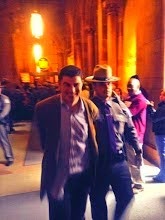
Photos Kris Ward, @iammoustache

I only went to one planning session for the Housing Works trip to DC to save the President’s Emergency Program for AIDS Relief. I just heard about the plan. We were supposed to meet everyone at Union Square Square 145 E 14th 5 AM. (I arrived at 5: 18 AM). So we could get to DC by 10 AM. Once in DC, we planned to drop six banners inside the Cannon Rotunda, a government office building, where activists were calling on the admin to implement the PEPFAR programs. The program has had bipartisan support, the money is there, allocated. Both Republican and Democrats in the House and Senate are there for PEPFAR. Yet, the administration is sitting on it. We must make sure funds are being spent, with data transparency, funding transparency. This is what we were going to DC. We’d walk into the Rotunda around 11 AM, in groups of five, everyone wearing all black. In the building, everyone whose participating will take out the banner from the bags, unfurl them, while chanting. Unlike the Metro Police who seemed to be ignoring the demos outside, the Capital police will be quick to stop our antics upstairs, banners flying from top corners.  

I was late, rushing to the train, even after Eric gave me a wake up call at 4 AM. We’d been here together the previous January and all through the spring and summer, in and out of jail, fighting the PEPFAR cuts and the Big Beautiful Bill Out there, gutting services. On the road with Eric, Asia and the Housing Works crew.

Darnell and Asia and Regginald and the rest of the Housing Works crew were there to greet me. 

“We’re still on time,” says Darnell.

With cuts to the ADAP program, aids drugs cut from the formulary, we were on our way to DC, to get the drugs back into bodies.   

On the bus, Eric laughs, everyone was here a half hour early, but you, he says. We talk about Cafe Lafitte, a Gay Bar in New Orleans, the oldest gay bar in the United States and all these trips to DC, his recent busts, the last few times were in DC, the oral history project we’ve been working on. He tells me about a film he worked on, called, A Closer Walk with Thee, about global AIDS, stories of “infections overwhelm the public health system and orphans face their own deaths, central Europe, where drug users spread the disease via shared needles, India, where husbands infect wives, and to the U.S., where grass-roots efforts in places like Kansas City confront cultural stereotypes.”

“Leave it with a little hope,” he says, describing our current moment, as PEPFAR looks like its funding is restored. Still 21 states are cutting the AIDS Drug Assistance Program, he says. They are either actively implementing or considering cost-containment measures for their AIDS Drug Assistance Programs.

“I give you permission to tell my story,” says Asia, walking up to talk with Eric and I. She’s been getting arrested with Charles and Eric as long as anyone. “I was a Black Panther. It all comes together with HIV and how we were treated,” she says, recalling last summer’s bust. 

Eric and I talk about the old political funerals and an old article about TB in the New York hospitals from 1992. Sawyer shows me the article, in which apparently he’s included. I don’t even remember that, says Eric. He’s been at this a long time. In the article on political funerals, the journalist asked me if I’d like one if I died of this. Impale me on the fence of city hall, he told the reporter, who quoted  him verbatim in an article in the post. “That was the time I was hurt at a protest, carrying Mark Fisher’s body in a casket to the White House. Keith Cylar was with me. The police pushed us, swarming around us, trying to get us to drop the body. They had us surrounded, jostling the casket, pushing it up and down. When we finally put it back in the car, I called Bob Hattay, in the White House, and arranged for something. Clinton did not want us there. When I got home, there were bruises all over my body. 

Death and sex, our conversation soon turns to a guy Eric used to see at the Twilo,  a nightclub in operation from 1995 to 2001 in New York City, on 27th Street. He ran into the guy through the years, the two of them continuing to share moments and intimacies. 

Arriving in DC, we meet at a church, hearing updates about the program. 

“How many of you are planning to take an arrest,” asks Charles, starting the pre-demo meeting. “We’re going to explain what's going on with an expert on PEPFAR, but first I’d like everyone to introduce themselves,” says Charles. 

“The fight it affects everyone,” says one Housing Works member. 

“I’m Eric Sawyer,” says Eric, introducing himself. “I helped start ACT UP,” he says to great applause. 

“I’m Reginald. I’m red.”

“I’m Cassidey, I'm red.”

“I’m Asia, of Healthgap.  I’m banned from the property,” says Asia Russell.

“I’m Meaghan with Housing Works.”

“I’m Kendall with Treatment DC.”

“We’re got a great crew,” says Charles. “A great action planned. A year ago we did a similar action on the Rotunda, and got lots of media, holding banners, dropping them over the balcony. Some of us arrested by the Capital Police, we are usually treated respectfully,” says Charles, noting that a year ago, a few members of the group faced higher than usual charges. Beware, he warns us. “Last year we were disrupting a hearing. And Asia and a staff member were dragged out, arraigned, prosecuted, and given a stay away order; the other changed with resisting and assaulting an officer. He couldn’t remember which arm was assaulted. We are generally given a post and forfeit. You give em $50.00, you get your charges dropped. This is your last post and forfeit, they tell us every time. Yet, we rarely get anything more than that. Maybe today we will? Beware if you do something obnoxious they will put you through the system,” Charles counsels. I recall the guys running away from the cops in their electric wheel chairs last summer, in a madcap demo that felt like the Benny Hill show. Try to be cooperative, Charles advises. 

“When PEPFAR is under attack, what do we do, act up fight back!!!”

“The ferocity of your action was so compelling last year, that it changed history. It's that compelling,” says Asia Russell, taking us through the last year of the PEPFAR program, when they cut UNAIDS. We heard about the cuts when we got out of jail. “We’re never giving up. We’ve won powerful things. With $4.6 billion a year, we saved 26 million lives across the globe,” says Asia. “We fought to protect the program. They obstructed the program. Now funding is released. But the money is sitting idle, unspent. We’re here to push back. The CDC, which also runs on PEPFAR money, is running out of these funds. We’re transforming history fighting for this program,” says Asia. 

“With PEPFAR, two other things are happening," says Charles, pointing out that the US is sitting on lifesaving supplies. Only pregnant and breastfeeding women get access to prevention technology. There’s country by country negotiations for PEPFAR.  A spoon of Plumpy'Nut  keeps a kid alive for a day.  “Where's Plumpy'Nut?” reports NPR. “A lifesaving food for malnourished kids is caught up in U.S. cuts.” The US is sitting on warehouses of it. 700,000 kids have starved. TB is the second cause of death. “Well before the bombs started in Iran,” says King.  “The US has been literally killing, starving people, encouraging disease.” (To say nothing of US measles outbreak because of RFK, who opposes vaccines)

Asia pointed to evidence Trump and Vought are blocking spending of more than $977 million in lifesaving HIV funding. The continuity of CDC’s FY26 PEPFAR programs are under threat. Still, congress is kept in the dark as the PEPFAR data blackout continues. One year into the Trump Administration, more than $977 million in appropriated PEPFAR funding for HIV prevention and treatment was unspent by the end of Fiscal Year (FY) 2025—triple the amount unspent at the end of FY 2024. Activists predict this backlog will worsen rapidly in FY 2026 unless Congress immediately reasserts its Constitutionally-mandated oversight authority.  In addition, the funding for Centers for Disease Control’s (CDC’s) PEPFAR programs will run out in just three weeks, by April 1 2026—because only 45% of their FY26 funding has been transferred from the State Department. Unless funding is transferred immediately, CDC’s global HIV programs across sub-Saharan Africa, Asia and the Caribbean will grind to a halt.         

“PEPFAR has saved more than 26 million lives and changed the trajectory of an epidemic. However, the Trump administration’s decision, over the objection of Republicans in Congress, to freeze PEPFAR funding has caused decades of progress to come undone and has been a death sentence for people with HIV relying on life-saving treatment. The U.S. must immediately restore PEPFAR funding and regain our standing in the global fight against HIV,” said Charles King, CEO of Housing Works. 

The Republican-controlled Congress has fully funded the global AIDS program, signaling bipartisan support for PEPFAR. However, Trump and Vought’s attacks on foreign assistance are obstructing PEPFAR from spending funds and saving lives. Activists anticipate the White House is planning its own shadow control over these funds, escaping the scrutiny of Congressional oversight. Vought was recently caught having taken $15 million in funding that had been allocated for foreign aid, to fund his private security detail. 

“Trump and Vought are responsible for stealing lifesaving prevention and treatment from countless people with HIV worldwide,” said Asia Russell, Executive Director of Health GAP. “Congress must wake up, wrest back its authority, and immediately expend PEPFAR’s funding.” In addition, the Department of State has instituted a PEPFAR data blackout, refusing to share PEPFAR’s program results—a level of secrecy that is unprecedented for a program that had been radically transparent regarding where money was being spent and its funding impact. And exploitative bilateral deals, for example with Zambia, are using HIV funding as a bargaining chip to secure U.S. access to Zambia’s vast mineral wealth. 

“This administration’s cuts to PEPFAR and its elimination of USAID are nothing less than savage. We demand that Congress take back its Constitutionally-mandated power of the purse and assure that US funds are fully expended on these life-saving programs,” said Kendall Martinez-Wright, TAG’s Government Relations and Policy Associate. “The price of this impoundment will be millions of preventable deaths and unnecessary new infections. We demand that Congress hold oversight hearings, interrogate Secretary of State Marco Rubio and OMB Director Russell Vought under oath, and start exercising its Constitutional powers.”

In the U.S., cuts to HIV programs and research in the U.S. are also growing, in what activists called a campaign of cruelty, with HIV treatment programs across 20 states planning to force people off their life-saving HIV treatment and onto waiting lists. Activists are demanding Trump, Vought, Rubio, and Congress fulfill their full obligation of appropriated PEPFAR funds and rejection of growing political interference in global and domestic HIV programs

 "AIDS cuts kill, fund PEPFAR now!!!" we chanted in the Rotunda, after making our way through metal detectors, unfolding banners from the balcony, calling for the congress to spend the money that has been allocated.  “AIDS Funding Cuts Kill.” The police pull down our massive banners. “TRUMP AND VOUGHT KILL PEOPLE WITH AIDS WORLDWIDE,” “OVER 200,000 DEATHS SINCE JANUARY 2025,” and “HANDS OFF PEPFAR.”

Security grabbed our banner fast. We went downstairs, dying on the floor  in the Rotunda. As soon as it starts, the police put plastic handcuts on too tight,  13 of us are arrested. 

“AIDS cuts kill, fund PEPFAR now!!!" screams Asia. 

“No more,” says a cop. “You’ve got cuffs on. The demonstration is over. You want more charges?”

Police search us and take us to the police vans, where two guys are led onto one side, women on the other. Inside the van, Reginald of Voices of Community Activists and Leaders, was not very comfortable: 

“I had to bend down to get in, while handcuffed behind my back. It was extremely uncomfortable. The handcuffs cut off the circulation in my wrists. Most of our time was spent handcuffed behind our backs.  I thought about the hundreds of children that were brutally packed into buses. The police were polite. I also thought about Christ's suffering on the cross. What I experienced was not as brutal or long. 15 of us got arrested at about noon.”

Reginald was quiet. That was not the case with Charles King, of Housing Works. 

Sitting in a clerical collar, Charles King and I talked about his Sunday lessons, this weekend at Riverside Church on Peter, who betrayed Jesus three times and Christ still made him the leader of the Christian church. If you ever think you really fucked something up, think of Christ's forgiveness of Peter. Failure is not final. 

As he often does in these circumstances, he recalled his favorite arrest and arrest officer, Hernandez from ACTUP’s infamous Stop the Church Action on  December 10, 1989 when ACT UP disrupted the services at St Patrick’s Cathedral. We went to trial. I defended myself, he told us. We all put a chain on us locking us to the pews, as we prayed, vocally. At trial, they had one aging deacon who testified we were running up and down the aisle screaming and cursing about  Cardinal John O'Connor. What were we saying? I asked the Deacon, over and over again.  What were we saying? Can you repeat that? I didn’t care if I went to jail. It could not be more funny. Officer Hernandez comes up and says the same thing. Later during recess, he asked me what I was doing this weekend.  I said I’m not going out with you. The one that guy away, almost four decades ago. I've been getting arrested with Charles a few times a year since 1998. Almost every time we get arrested he mentions this wondering about old Officer Hernandez, his all time favorite arresting officer, 

Other arrests have been less fun for King. He recalls hearing fireworks from his apartment on 12th Street in the East Village. He runs out to see what is going on, a little weary as he’s been warned  there is a death threat on his head. Squatters are running to and from, followed by cops on an eventual 4th of July, in the late 1980s, the years when riots were aplenty in the East Village. Police run inside, pulling me, throwing my head against the wall inside. Looking at my head bleeding, the police insist, I guess we need to arrest you. We won $75,000. $50 of it to me to make payroll, the other $25 to Ron Kuby. 

The squatters are fun to get arrested with, I reply. King wasn’t having fun that time. 

My arrest fantasy is we get pulled into the police van, in our handcuffs, only to find its not really a police van at all, its a party bus in NOLA, filled with fake cops, giving us lap dances as we’re handcuffed, playing disco music, taking us to Kermit’s Mother N’Law’s Place in New Orleans. 

Finally, we are taken to the “prisoner holding center” where we usually pay our fines. Sitting inside all afternoon, till one after another we get out, some faster than others. Some of us have been arrested here three, four, five or even seven times here in the last year. Those with the higher number of arrests are given court dates and held. 

The rest of us are let go, making it home to NYC later in the evening. I find myself thinking about Keith and all those old demos, the old busts, all those years ago. A few of us talk about those old days, the spirit of Housing Works through the years. 

The last few are eventually let out of jail, with court trials later in March. 

A bit of the beloved community today, an I thou day, I write Charles, referring to the beloved community Dr. Martin Luther King Jr, a society based on justice, equality, and love. “The aftermath of nonviolence is the creation of the beloved community” said King.  I was also thinking of "I and Thou (1923) by Martin Buber, the foundational work of philosophy that explores human relationships through two fundamental modes: the I-Thou (a direct, mutual, and whole relationship) and the I-It (an objectifying, utilitarian, and detached relationship). Buber argues that meaningful human existence is found in the I-Thou encounter, which can occur with other people, nature, or God (the Eternal Thou). 

When we got home, Eric wrote, “Yesterday I joined activist from Housing Works, HealthGAP, Treatment Access Group and former staff of PEPFAR, and USAID in demonstrating again at the Rotunda of the Cannon Building of the House of Representatives for the Administration to stop the games and spend the funding appropriated by bi-partisan support of PEPFAR which in response to our prior protests had restored a lot of funding for the program. The Administration continues to block the funding from providing life saving  drugs and treatments for millions of people around the world in every step or the funding and operational steps of the program.”

Activists demand:

Immediately release already-appropriated, unobligated PEPFAR funds, demand activists. 

Break the blackout on PEPFAR data, so Congress and people with HIV know how funding is being spent and can program based on data 

Activists are calling for full obligation of appropriated PEPFAR funds and rejection of growing political interference in global and domestic HIV programs.


PEPFAR action Feb 2025

PEPFAR action Feb 2025


Monday, March 2, 2026

Infernos and Tender Mercies, Iran Follies and Religious Anarchism


In the 1983 film, Tender Mercies, Mac Sledge (Robert Duvall) wonders about one kid who lost his Dad in Viet Nam, another on the highway: "Sonny's daddy died in the war, my daughter killed in an automobile accident. Why? See, I don't trust happiness. I never did, I never will.”

It’s there but it goes away, ever appearing and receding into the distance.
I recall West Texas, going to visit Dad’s college buddy there, traveling with the family, the same roads Mac traversed in West Texas. 

At breakfast with Mom, we chatted about a dream she had, those days long behind us, but never entirely gone. 

Was Jamie here last night, she asked.

No, he was here in November. 

He was here, just not last night. 

My eyes drift to Left to the Left, Anatole Dolgoff’s memoir I am reading, with a quote from Albert Einstein:

“Now he has departed from this strange world a little ahead of me. That means nothing. People like us, who believe in physics, know that the distinction between past, present, and future is only a stubbornly persistent illusion.”

Our dreams blur into the day. Looking at the headlines about the war, Mom recalled Fred, her friend who settled in West, Texas after college. He suggested they get a bottle of champagne to share, the two staying in a hotel in Tehran in 1965 with Dad and Tad. They had driven overland, from England, by sea, to France, across the continent, one road at a time, visiting Tehran, on the way  to India.

And we made our way back to New York.

Snapping shots of the industrial waterfront, Baby C gave me a sneer as we careened past Newark. I turned back to reading Hannah Arendt, on the way to Judson. 

There  Micah preached about Mary Magdalene and divine femininity, ever disrupted, by Empire and patriarchy, on Transfiguration Sunday.  As the story goes, Jesus leads followers up a mountain, revealing his divinity, with an otherworldly glow. He looked down at the city below, a bridge, with a clear view from Epiphany to Lent. It's hard to preach about Women’s month, as your friends are being bombed, noted Micah, in his sermon, like countless lives, disrupted by the Iran follow of the day before. 

West, Ray and I walked through Washington Square, past musicians, artists, talking about poetry and Rachel Maddow’s take on the way, on the way to the Center, for a conversation with Visual AIDS co-founder Robert Atkins on the occasion of his new book, AIDS, Art & the Origins of the Culture War: Selected Writings of Robert Atkins, joined by Sarah Schulman and Jackson Davidow. The three discussed “the Culture War, defined as a Christian Nationalist assault on the increasingly multicultural society and liberal ethos that emerged in the 1960s in the new form of attacks by Americans on other Americans. Opposing this movement, a few little-known groups–artists, queers, and people with AIDS, challenged the authoritarian inroads on the Constitution’s First-Amendment guarantees of free expression.” Atkins recalled the debut of the AIDS Memorial Quilt in Washington, DC, a battle of memory against cultural erasure, Pat Buchanan' speech at the RNC in 1992, that sounded like Goebbels wrote it, Anita Bryant’s retrograde rant from 1977, Nixon’s silent majority, on and on. 

The assault on trans lives and immigrants continues this movement.

Back East we strolled to Village Works, greeting Damian and Alley, at Village Works, on the way to East Broadway to chat with Anatole for a conversation about his father and dialectical anarchism, one big union and the wobbles, our eternal struggle for a sense of our humanity, wondering, was slavery or serfdom worse. Anatole recalled his favorite quote from Tolstoy: “The essence of all slavery consists in taking the product of another's labor by force. It is immaterial whether this force be founded upon ownership of the slave or ownership of the money that he must get to live.” 

Back home, I signed in for our Sunday book group. Ken is talking about Kenneth Rexroth’s approach to religious anarchism. We talk about Martin Buber’s The Way of Man, a series of postwar writings on Hasidism,  his meditations on religious anarchism. 

 Where are you, wonders one Rabbi. What have you done with your life?

Replying, Buber seems to paraphrase TS Elliot:

 "We shall not cease from exploration

And the end of all our exploring

Will be to arrive where we started

And know the place for the first time." 

Elliot, of course, seems to be leaning on Chrétien de Troyes’ Perceval, the Story of the Grail, an unfinished Old French verse romance, originating from the Arthurian romance genre and the Grail legend. Or at least it sounds like it to me. De Troyes follows the journey of Perceval becoming a knight and encountering the mysterious Grail. The story breaks off, leaving his quest incomplete. He searches to find the grail again, not seeing it until he returns home, where it remained his entire life. He wasn’t able to see it until he returned.

What are you doing? Have you used your life well, wonders the Rabbi. 

You cannot be closer to God if you are dismissing your fellow humans. 

Do unto others, as you would have them do unto you.

That's pleasing to god. 

Buber seems to paraphrase Freire’s Pedagogy of the Oppressed. 

Love thy neighbors; be good to your neighbors. 

There’s an anarchism to Buber’s writings.  Is Buber an anarchist?  Well, certainly a "religious anarchist" or a proponent of "anarchist-socialism" and utopian community, though he did not strictly identify with political anarchism. There is certainly a theology in his thinking.

An elder in our group mentions an old testament story of a group of men about to stone a woman who has had an affair. He who has not sinned throw the first stone, says one. Yet, everyone has sinned. No one should throw a stone. Don't throw stones at anyone. 

My mind trails back to our current moment. 

As my lawyer Ron Kuby noted:

“The US-Israel joint venture yesterday murdered at least 115 Iranian schoolgirls.  I feel so much safer.  OK.  Let's try this.  There are nine dead Jews today who would not have died today had this war not been started by the US-Israel.  How does this make Jews safer?”


Feb 27th

Amnesty International has been gathering evidence of Iran’s mass killing of protesters following an ongoing internet blackout imposed by its authorities to conceal their crimes. The situation is dire, with countless lives at stake.

Feb 28th

I met my friends from Rise and Resist, a few of whom I know during the anti Iraq War years. I had my strangest bust with Jenny in 2002 before the Iraq War. Fun to see her, to talk about history. Donna told me about her first bust. Little did we know another war was in motion. We chatted about cats and demos, the ACTUP anniversary demo coming up March 21, dancing with our lawyer at his Fat Tuesday Party into the night…

Feb 29th

Word about the bombs in Iraq in the news on Saturday. 

How can I say I detest human rights violations, crackdown on protest and speech in Iran and the US. I also detest US interventions there, then and now.

My Louis Colombo says...

"Recent news with respect to Iran forced us to hold two contradictory thoughts in mind simultaneously:

1) This is likely an illegal war that will end badly.

2) The Iranian people deserve liberation from this murderous regime.

If there is anything to be hopeful here, and it’s a slim hope, it’s the 2 will be the unintended consequence of 1."

What could go wrong? Hmm, have we seen this movie before?

On August 19, 1953, the U.S. CIA and British intelligence (MI6) orchestrated a coup, known as Operation Ajax, which deposed Iran’s democratically elected Prime Minister Mohammad Mossadegh. The intervention, aimed at protecting Western oil interests after nationalization, restored absolute power to Shah Mohammad Reza Pahlavi, establishing a long-term dictatorship, laying the seeds for long term animosity toward the US.

Feb 29th, 

Later that afternoon, we made our way to Time Square for the anti war demos, the usual anti war groups and their money for …, not for war signs. It's like groundhog day here. 

War with Iran? Really ? What could possibly go wrong? Not that I'm a fan of the regime that recently murdered some 7,000 people speaking up. I recall an Iran nuke\peace deal with Iran that Bolton gutted.

Says Nicholas Kristof in the Times: "When you’ve witnessed the horror of war, you believe it should be a last resort — not an abyss we tumble into without legal basis or clear objectives, pushing us all unnecessarily into a riskier world in which the only certainty is bloodshed."

Snaps of chums from the demo at Times Square.

Feb 29th

The world going nuts, I walked around the Lower East Side, to the anti war demo, to visit Mom and

the ageless Shanny, trying to make sense of it all.

My friend Cleve Jones notes..."My memory is not what it used to be. Please remind me of all those times US military intervention brought freedom and democracy to formerly repressed and abused peoples."


A strange few days since the snow came. 

Feb 21/22

Spent the weekend with Will and Mom and Sophia, cooking, watching hockey. Go USA men, To Kill a Mockingbird, thinking about Moms childhood world. The books banned now. How far we've moved. First night.

First night, I took the train to Moms. On arriving I was worried I might have left Nigel, the cat, outside the night before. They regularly beg to go outside. I was petrified I had left our little one outside freezing. I couldn't sleep. Rushed home to find Nigel inside. Oh  ve. Cat love. And then back out to Princeton for more hockey. 

Holy shit!!! 46 years. We were kids in Dallas watching the game on the TV in Dad's study in Feb 1980. I had a party to watch the U S lose to Canada in 2010, thirty years later. Wow. Epic game Canada!

Feb 22

We've been at book group for over a decade. Nothing like meeting my comrades, on a snowy day, to read a sexxxy modern novel, Eileen Myles, Inferno (A Poet's Novel),  about lesbian subjectivity in the East Village,  modeled on Dante, mentors with robust derrieres, thinking about Virgil, Kathy Acker, Ted, pixie dream girls, feelings and words, being lost in a dark wood, scribbling notes on a bar napkin. 

"All the details of my life were in exact order and yet I was tumbling in them-out of order like a tremendous wave had hit me and I was thrown off the ship and I awoke or dreaming, or dead I knew not-no I couldn't speak," writes Eileen Myles in Inferno (A Poet's Novel).

Reading about Eileen writing about Eileen becoming a poet, Mattie suggested we think about Borges, particularly his 1962 short story Borges and I:

“The other one, the one called Borges, is the one things happen to. I walk through the streets of Buenos Aires and stop for a moment, perhaps mechanically now, to look at the arch of an entrance hall and the grillwork on the gate; I know of Borges from the mail and see his name on a list of professors or in a biographical dictionary,” Borges begins, writing about a writer named Borges. “Years ago I tried to free myself from him and went from the mythologies of the suburbs to the games with time and infinity, but those games belong to Borges now and I shall have to imagine other things. Thus my life is a flight and I lose everything and everything belongs to oblivion, or to him. I do not know which of us has written this page.”

Feb 23 / 24

Snow pours all night, into the morning. I greet Nigel, our cat, looking at the tree outside, that howled about, I guess I need to trim, that was swaying about, bumping, throwing off snow, howling in the wind, wind gusting, hurling into the window, keeping me up, alive, supernatural. Still quiet.

Strange days. A huge wave of snow, enveloping us. Digging us out, it seemed to pull back, tugging at me. By late afternoon it stopped. We're still digging out. Remote teaching today. Sigh. The skies are blue today. It's lovely and bright out.

Feb 25

Jonathan says: “The State Of The Union under the claws of this regime is a...state of disgrace.”

For a second, in the afternoon, it stopped snowing. Sidewalks were cleared. Barbes open, a table for us in front. But woke to more today. Sidewalks covered in white. Flurries drifting from the sky, filling the dreamscape.

That morning I rode to City Hall for the rally against Buffer legislation, restricting protest in New York. 

“I am writing to you as a New Yorker opposed to the buffer zone legislation [S.8599 (Sutton) / A.9335 (Lasher)], and Governor Hochul’s inclusion of the proposal in her budget. I am committed to safety, and gravely concerned about the buffer zone legislation,” I wrote. “Strong, pluralistic democracy creates the best conditions for the safety of all marginalized groups. Legislation that restricts protest undermines the open society we cherish here in New York State, which has allowed diverse communities to thrive for centuries. The proposed bill will restrict New Yorkers’ right to assembly and free speech at exactly the same time that the federal government is waging war on our cities, particularly targeting protestors and legal observers.  Support the right to protest!!!!”

Inside City Hall, my friend Ken testified:

“My name is Ken Schles, I’m a father, a lifelong New Yorker, and a Jewish member of JVP. I’m also a childhood survivor of antisemitic violence. I strongly oppose Intros 1a and 175a to create arbitrary deployable “buffer zones” around places of worship and educational facilities. 

These bills, presented as part of a package to combat antisemitism, pit parts of NYC’s Jewish community against the right to protest. They don’t address hate. They threaten NY’s storied tradition of activism, protest and the public’s ability to speak truth to power. These bills give police “discretion” to criminalize proximal acts of protest. In Minnesota, it was also by “discretion” that DHS officers murdered peaceful protesters deemed to be in the “wrong” place. Constitutional rights should never be contingent on police “discretion.”


Intro 1a was written in response to incidents at synagogues where stolen Palestinian land was illegally auctioned. Synagogues should not be a cover for illegal acts. 


In our upside-down world, even valid claims of anti-semitism have been weaponized against us. In places of higher learning, antisemitism is used as a pretext to eliminate research funding; to threaten accreditation. My daughter, currently studying for her Masters at Columbia, tells me how fearful students and faculty are to speak their minds. She describes a chill that has befallen the campus. 


These bills will do nothing to reduce hate, nor would they have safeguarded me from the antisemitic violence I experienced as a child. They follow upon a pattern of federal civil rights reversals that allow egregious violations of rights to flourish. I implore the City Council to reject Intros 1a and 175. Consider seriously that only in a free society will NY’ers be safe.”


Feb 26th

Al and I talked about Trump and Hockey and the time Bobby Colomby took a pic of Monk and the ways his friends talked about LBJ. And they lit a great fire at Bijans. The snow melted a little on Hoyt Street.

“Columbia says DHS detained student after agents entered university building…”

Feb 27th

My friend Shan Shan Song's book of poems,Thick as My Noodles, Bok Choy of My Soul: Poems (North Meridian Press),

is finally seeing the light.  These are gorgeous poems of a life, I wrote in a blurb.  Reading Thick as My Noodles, Bok Choy of My Soul, sometimes one poem reminds you of everything, one story, one body in space, walking through a city, hoping for something. For a short while I lived in Chicago, walking, looking for something, losing everything, finding a city of characters, flop houses, trains, blues lounges and leather bars. I learned about sexologist Alred Kinsey’s explorations of prisons, queers in jail, locked up, in and out of the underworld. When Kinsey conducted research in Chicago in 1939 and 1940, he found that queer life was far more expansive than understood, the world more diverse, much like gall wasps he collected as a young entomologist, that assumptions of sexuality needed to be more tolerant and less judgmental. Chicago was a critical location for the study of queer lives, reminding us that notions of “normal” and "abnormal" sexual behavior missed the mark. I can only imagine what would have happened if he’d come across the boisterous, heartwarming, comradely poems of Shan Shan Song, who locates Chicago at the center of their queer imaginary. This is a  poetry of a city, a space for lovers and mental health breakdowns, for polyamory and wrestling practice, social work and trauma, “where Emma Goldman had her ice cream shop… ” Shan Shan Song’s story is  a city, Chinese-American, neurodivergent, trans amorous, of songwriting,  community organizing, petting cats, making new recipes for polycules and singing. Dive in and discover a cosmos.”