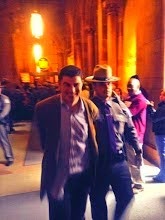
Monday, November 10, 2014

#ResistRikers Rally against Solitary Confinement and the American Gulag

banners by #ResistRikers 
photo by banners by #ResistRikers


For as long as I can remember, I’ve been terrified of the idea of solitary confinement.  Reading memoires on the topic, Before Night Falls by Reinaldo Arneas or the stories of years of solitary confinement endured by the German Red Army Faction, gave me chills.  Many lost their minds in their isolated rubber rooms.  Anarchists have long pointed out that every prisoner is a political prisoner.  One doesn’t have to look very hard to see that we have a huge, ever growing prison population, some there because of poverty or the war on drugs, lack of housing or conviction of petty crime, some three percent of our population navigating the line between prison and parole.  All the while our public housing and hospitals are collapsing, or crumbling. So those on the outside find themselves caught up.  Many are adolescents; others mentally ill.  And there they are all treated like criminals, locked away, often placed in solitary confinement, beaten or subject to brutal discipline.


Saturday, I posted a message to facebook, “hey peeps... a few of us are meeting at 388 Atlantic at the commons to ride together to the action. Join us at 1:30” or the Resisting Rikers rally.” The invite explained:

SATURDAY NOVEMBER 8 We return to #ResistRikers at the gates of NYC's jail complex with enough of our allies to make the walls tremble.

Bring your voice, your banners, your friends and your family. All are invited to speak about their experiences.

Meet outside the Rikers sign at the corner of 19th Av & Hazen St, the take the Q100 bus from Queens Plaza (E-M-R) or the 21 ST Queensbridge (F) (see the Q100 route: 
http://tinyurl.com/o4e2f3s)

We support the people of Ferguson and their call for #FergusonOctober and we see the struggle for justice at Rikers as one of our parts to play in this effort.

See media from last rally.

NO to solitary confinement
NO to youth detention
NO to jailing mentally-ill people
NO to collaboration with ICE
NO to early lockdown 
NO to officer abuse
NO to medical neglect

OWS veteran, Cecily McMillan, who spent 58 days in Rikers this summer, had organized the event.

“Its barbaric to put anyone n solitary confinement,” I explained to a friend outside the commons before riding over.  “Thought we had rules against cruel and unusual punishment.”
“That’s the truth,” noted a young woman on the sidewalk, walking by.


rikers-island-approaching


Riding the dozen from Atlantic Ave to Queens, a weird tension/ fear gripped my stomach, particularly, as  I made my way down 20th street to the facility, an eerie feeling along the open space.


“That’s a good bike ride,” noted Cecily when i arrived at the welcome sign just before the bridge to the underground world of the US gulag.  
People were carrying signs, hinging banners.

“Rikers = Death,” read one sign.  Another noted the incidence of suicides taking place there.

“Mass incarceration=the new Jim Crow.”

“Corrections Officers are Getting away with Murder”

“Mass incarceration = social control.”

“I eat every meal alone.”

Bridge to Rikers 


I asked Cecily what she hoped to see. “I want to see us grow to 12,000, one for every person in there.  I want us to try to take over the bridge.  If they wont see them as people, we’ll represent them as people.”

Standing there, I talked with several activists, including Juanita, an elder African American women with a Black National Congress pin. She had been upset before coming.  That morning, she had been doing a little background research on the conditions there.   “Photos of kids with scars, burnt, beaten and bleeding” she explained.  Yet, she was glad she came. Through such actions, we beat back that depressing feeling she finished.  “You don’t have done anything you get that depressed feeling.  Yet, action equals life.   Looking  at Cecily and everyone else who was so energized there, I think Juanita was right.

Social worker Joan E Roney noted.  “As an environmental and human rights activist,  I had to come out to demonstrate at Rikers.  Prisons should not be a place of mental health treatment.  Prisons should not be a place of education.  Prisons should not be the homes for our youth.”

Cecily made a statement to the press.  “I was imprisoned at Rikers for 58 days because of my involvement with OWS.   March 27th, 2012,  I was sexually assaulted by a police officer at Zuccotti Park, was arrested, and had a grand maul seizure and was left for dead.”  After a long trial, McMillan was sentenced two years later.  “The horror of Rikers”  takes place in countless ways she explained.  “Rules change every day. The lights are on all the time.  Sleep deprivation is constant. “She rattled off a list of other indignities.  Strip searches, sexual assaults, sexual quid pro quo’s.  “Anything you can imagine.   Getting sick can turn to death,” she explained, recalling another prisoner who never got the proper treatment and died of complications there. “She died of systematic organ failure.   After  I got out, one woman told me she would not have known what happened to her sister if it wasn’t for my editorial in the NY Times (see below).  We asked for programs.  Can we have basic conditions?  The officers’ and prisoners need to be treated as humans. Moving the problems to a consulting firm passes the buck.”  Instead, McMillan suggested that people who have been through Rikers be engaged as part of the solution. “Rather than create a bridge to a secondary under class, talk to the families.  You want to make changes, you need a community review board, our own ad hoc community review board.” 

            A quarter century after the fall of the Berlin Wall, we’ve created a our own walls between those on the inside and the outside, those on one side of the bridge and the other, one side of the water and another, between the affluent and those caught speaking out or without access to lawyers.   A part of us, a part of what’s decent about us is being diminished as we watch so many shuffle through the revolving door between prison, parole, violation, and re entry into our own gulag., without speaking out.

 “If only it were all so simple! If only there were evil people somewhere insidiously committing evil deeds, and it were necessary only to separate them from the rest of us and destroy them. But the line dividing good and evil cuts through the heart of every human being. And who is willing to destroy a piece of his own heart?” 
― 
Aleksandr Solzhenitsyn, The Gulag Archipelago 1918-1956


The Opinion Pages | OP-ED CONTRIBUTOR

What I Saw on Rikers Island

Cecily McMillan on Brutality and Humiliation on Rikers Island


I RECENTLY served 58 days of a three-month sentence on Rikers Island. I was convicted in May of assaulting a New York City police officer as the police cleared Zuccotti Park of Occupy Wall Street protesters in 2012. (I am appealing my conviction.) I got a firsthand experience that I did not seek of what it is like to live behind bars.
Rikers is a city jail; it holds some 11,000 inmates who are awaiting trial or sentencing, or who have been convicted and sentenced to a year or less of time.
During my incarceration, two correction officers were arrested on charges of smuggling contraband, including drugs, to inmates. The week after I was released, two more correction officers and a captain were arrested on charges of having beaten a handcuffed prisoner into unconsciousness in 2012. Last week, The New York Times reported on the “culture of brutality” on Rikers. The city is nowinvestigating more than 100 reported violent assaults on inmates.
None of this would surprise the inmates of the Rose M. Singer Center, the women’s barrack on the island, who routinely experience or witness brutality of all kinds.
On one day in May, I was waiting outside the jail pharmacy for my daily A.D.H.D. prescription. A male officer began harassing me, and when I made the mistake of looking at his badge to get his number, he slammed his body into mine and shouted a sexual slur at me.
I wrote up a complaint and then showed it to my lawyer, but he advised me not to file it, because of the risk of retaliation. Despite formal rules governing the interactions between correction officers and inmates that are detailed in the inmate handbook issued to everyone at intake, in reality we had no rights and no recourse in these kinds of conflicts.
Violence is easy to grasp and to condemn. What’s harder to understand for people who haven’t done time is the day-in, day-out degradation and neglect.
Inmates are routinely denied basic medical treatment. I saw a woman soiled with vomit and sobbing for hours. We other inmates were afraid and concerned. We didn’t know what was happening, or what we could do. Finally, at the insistence of a few inmates, she was taken to the hospital. She never came back. Her name was Judith. She had befriended me before she died.
I fear for my jailhouse “madrina” (godmother), who remains on Rikers. For more than a month, she has been asking to get a biopsy of a lump in her throat, which she worries is a recurrence of the cancer she was treated for years ago.
And then there is the ritual humiliation of the inmates — not physical death, but death of the soul. Our dorm was searched at least twice a month, and more often if the guards wanted to set an example. Two or three captains, and about 10 officers, male and female, would file into the dorm in full riot gear, wearing plexiglass masks and carrying big wooden bats.
Another set of female officers filed into the bathroom and stood in a line facing the stalls, which lack doors. We were ordered to lie down on our beds, face down, hands behind our backs. A third set of female officers filed in.
After we put our green jumpsuits back on, we were marched into the day room where we were ordered to stand facing the wall, sometimes for hours, while the dormitory was searched, the bedding flipped over, our personal possessions ransacked. Then a work detail of inmates went into the dormitory and swept all our “unapproved” belongings — fruit, pens, extra blankets — into trash bags. The aftermath reminded me of what it was like to come home after a hurricane in southeast Texas, where I grew up.
In the face of inhumanity, many of the women I shared quarters with were amazingly resilient and caring. They looked after one another, and they looked after me.
In March, Mayor Bill de Blasio appointed Joseph Ponte as the city’s new correction commissioner. By reputation, Mr. Ponte, formerly the head of the Department of Corrections in Maine, is a reformer. He recently told Times reporters that Rikers Island needed change to “really bring it into the 21st century.” But he denied that Rikers had “a culture of violence.” I disagree.
Fixing the prison system won’t be quick or easy. But in the short term, things could be done to improve conditions on Rikers. Before I left, I asked the other inmates what changes they would make. They had many ideas. Here are two.
Upon intake, every inmate should receive a physical and psychological examination, as well as medication and treatment as needed. (I waited three weeks before receiving that daily prescription medication, which I had been taking before I was incarcerated.) While in jail, each prisoner should be guaranteed access to a doctor within 24 hours, as well as emergency medical help — such action, I believe, could have saved Judith’s life.
And inmates need to be able to file grievances about mistreatment without fear of retaliation. The rules governing ordinary interactions between inmates and correction officers, as well as the process for filing grievances, seem all too often to describe an alternate reality where interactions are calm, orderly and reasonably respectful.
But what I saw and experienced on Rikers was far more chaotic and arbitrary. Yes, the women and men on Rikers have been accused or convicted of crimes — but that does not mean that they should be deprived of their basic rights to safety and care.

Post Script.

A few weeks after our rally, the NY Tmes posted an update.

Cecily commented on facebook.

well, that's about half ‪#‎resistrikers‬ demands met
It will take vigilance to ensure that the old, abusive system is replaced by a more humane one.
NYTIMES.COM|BY THE EDITORIAL BOARD


Thursday, November 6, 2014

Reflections on Rethinking Jay Street and Tides of Cars and Ugly Buildings from Robert Moses to Bruce Ratner.


Building along Jay Street and Tillary.
Between Robert Moses’ design for the Brooklyn Queens Expressway and Bruce Ratner’s Metrotech center, downtown Brooklyn has been forced to contend with years of poor plans.  Waves of cars, rezoned streets, office towers, bland buildings, and unused public space, the corridors down Jay Street are some of the city’s least friendly or inviting of spaces.   The  mismanagement of the space is years in the making.  Six decades ago, Robert Moses helped put the kibosh on plans to build a baseball stadium at Atlantic and Flatbush as he laid the plans for more cars to pour through the area; sixty years later Bruce Ratner used the same eminent domain Moses was famous for to build Atlantic yards in the same space. Today, the biggest tide here is traffic and double parked cars, blockng access to bus and bike lanes.  

Police car parked in bike lane on Jay Street. November 5th. 


Yet, over the last year countless players have started a conversation about ways to rethink this space.  We held a session about this question at City Tech on 300 Jay Street on October 8th. The result was Rethinking JayStreet.

On the way to the Rethinking Jay Street session, long term cycling advocate Barbara Ross found herself blocked by a police car parked along a bike lane on Jay Street. Of course, this is the crux of problem on Jay Street and throughout New York. There is little to no enforcement of the traffic laws prohibiting cars from double parking in bike lanes.  The result is lines of double parked cars with other bikes and cars making their way around them, between cars taking u turns, and police sitting n their cars texting. Some day, someone is going to get killed here, as happens every couple of days in  different neighborhoods in New York. Yet, we'd like to solve the problem before then.  This was why we were holding the event Rethinking Jay Street.
"Jay Street bike lane was blocked by ‪#‎nypd on my way to the Rethinking Jay Street Symposium." Photo and caption by Barbara Ross.

Amy Cohen, whose son Sammy was killed by a car last year, and Frances, whose son Matthew was killed by an automobile turning backward to make its way onto the bridge entrance at Sands off the Manhattan Bridge, just off Jay Street.    Both took part in the Right of Way Ride of Remembrance the week after Rethinking Jay Street. 
Jay Street is a critical connector to the Brooklyn and Manhattan bridges, but it lacks the bicycle and pedestrian infrastructure needed to protect New Yorkers from dangerous traffic. Drivers regularly make illegal U-turns and double-park on the street, blocking the bike lane and imperiling the thousands of bicyclists that use the popular commuting corridor every day. The T.A. Brooklyn Activist Committee, in partnership with Council Member Stephen Levin, Community Board 2, The Downtown Brooklyn Partnership, DUMBO BID and Forest City Ratner held a community planning session – called Re-Imagine Jay Street – in the spring of 2014. More than 100 Brooklyn residents attended and weighed in with ideas to add protected bike lanes, pedestrian plazas, bike corrals and other traffic calming measures to reduce dangerous speeding and double parking while encouraging healthy transportation choices for more New Yorkers.

Now the committee is working with partner organizations and political leaders to submit a formal request for theseimprovements to the Department of Transportation. 

The hub of a rapidly transforming downtown, Jay Street is worth examining. After all, everyone seems to agree that Jay Streets is a mess. By the spring of 2014, architects were designing plans, transportation advocates assessing the state of the problem, holding meetings, planning, and remapping the space.  Few felt satisfied with the sprawling office complex of the Metrotech Center stretching from Tillary to Fulton, with Jay and Flatbush running through them, especially after the 2004 rezoning.   But not enough of these groups seemed to be talking with each other.

So, Jason Montgomery, a City Tech architect, and Eric McClure, an organizer with Park Slope Neighbors who helped defend the Prospect Park West Bike Lane and spearhead the campaign to reinvent Jay Street, started putting together plans to expand the conversation Transportation Alternatives started last spring.  People First on Jay Street; make Jay Street friendly for people declared Transportation Alternatives (TA).  TA argued:


Rethinking Jay Street was designed to get more people talking and involved in the plans.


Still Jay Street, like our global borough, is in flux, like many cities. Across the globe, the very nature of urban centers is evolving, with great emphasis on sustainability and energy conservation, knowledge production, health and welfare, economic development, social vitality and civic involvement.

I introduced our panel with speakers including Mike Lydon, The Street Plans Collaborative; Jessica Dailey, Curbed NY; Ryan Grew,Downtown Brooklyn Partnership; Caroline Samponaro, Transportation Alternatives; and Jason Montgomery, City Tech, with opening remarks from Council member Stephen Levin.

If you look at Jay Street, you see a street in transition, with universities, economic development, experiments in sustainability and double parked cars.  And there is little to no enforcement of the traffic laws. The only vision zero on Jay Street is vision zero enforcement, explained one friend. 
At the Rethinking Jay Street symposium, urban planners, policy makers, and community members bring their insights to this discussion to help define a new vision for Downtown Brooklyn.  They will consider topics such as the qualities of 21st century cities, remaking streets, urban accessibility, sustainable modes of transportation, place-making, social vitality, and civic involvement.
Finishing the introductions, I asked everyone to take some time to dream about what they would like to see here. 

Councilman Stephen Levin offerred some preliminary remarks suggesting we all have to push the city to help fix many of the obvious problems with traffic flow along Jay Street.   Jo Anne Simon concurred.


We began with short presentations on the current state affairs and possibilities for Jay Street, thinking about whats right, wrong, and could be of jay street as the hub of our rapidly transforming global borough.


Ryan Grew, the Deputy Director of Operations for the Downtown Brooklyn Partnership, laid out some of his research on the Brooklyn from Fulton to York Street along Jay, nothing that there was so much to do to better utilize the public spaces along the street, connecting people with the oddly designed, car centric spaces from the Manhattan Bridge Plaza to the Brooklyn Bridge Promenade and Cadmen Plaza and their cumbersome entrances and exits.


Caroline Samponaro, the director of bicycle advocacy for Transportation Alternatives, spoke about Jay Street from the vantage point of cycling as well as efforts to make streets all over New York, including Brooklyn safer.  Her point is that cycling infrastructure makes cities better.   From this vantage point, she described the Transportation Alternatives Plan to re imagine Jay Street, connecting multiple stakeholders with plans to revitalize the space, expanding pedestrian spaces.  Transportation Alternatives sent teams of advocates out looking at the street, conducting surveys, and identifying problems, such as illegal u turns along Jay Street, noting problems and alternatives.  “For as long as I’ve been here, Jay Street has been a mess,” she explained.  “But there are things we can do.  Today, we passed legislation reducing the speed limit in New York.  It came through a lot of mobilization.  this came from the grassroots.  This is a grassroots problem and opportunity to do better."


Mike Lydon, a Principal of The Street Plans Collaborative, concurred, describing a study he is drafting on the need to redesign Jay Street to make u turns impossible.   “Lets do better,” he concluded. “The sense of place is missing.”


Jessica Daley, a senior editor at Curbed NY, pointed out some of the structural problems. “The 2004 rezoning did not  include support for infrastructure, including transportation.” She argued the neighborhood would need a new rezoning, as well as better connection between Jay Street with Dumbo.


Jason Montgomery, an architect at City Tech, followed with a tour of the different eras of development of the era from 1792-to the 20th century redesign of Cadman Plaza.   He laid out a few of his questions for the space.


Real Estate:
The real estate market is bringing thousands of new apartments and hotel
rooms to Downtown Brooklyn rather than the offices that zoning encouraged.
This development is occurring regardless of the hostile streets (heavy
traffic, pollution, dangerous crossings,) lack of community and commercial
services, and a disconnected street grid that inhibits easy movement. How
can the real estate market be leveraged to address these issues? 
Is it in the developers' best interest?
Businesses:
How is the availability of new office space impacting business growth? How
is the residential focus of new development projects impacting the goals
for the Brooklyn Tech Triangle? If new space for business use is developed
in Downtown Brooklyn, what should it be like to meet the demand?
Zoning:
Downtown Brooklyn is designated as a special purpose district, with special
attention to certain streets (Fulton Mall, Atlantic Ave, Flatbush Ave). Is
the current zoning strategy likely to give us a vibrant urban community in
Downtown Brooklyn? Do we need to broaden the boundary of the special
purpose district?  Do we need an alternative planning strategy that goes
beyond the limits of use based zoning for this particular part of the city?
Jay Street is well positioned to be a Main Street of Downtown Brooklyn, the
north south spine tying into the east west spines of Atlantic and Fulton
(counting the continuation of Jay Street and Smith Street together).
Jay Street's design could well play a central role in defining the future
of Downtown Brooklyn. What should be fundamental to any vision of remaking
Jay Street so that it can serve this critical role?
Public Space:
There are significant areas of unbuilt/open space in parts of Downtown
Brooklyn, but much of this unbuilt area is not accessible or usable (i.e.
parking lots, semi public green areas, areas around the BQE and Bridge
ramps) What types of public space do we need to better serve the growing
population? How can we better use the open spaces we already have
(including the Brooklyn Strand)?
Transportation:
If Jay Street should be typologically considered a Main Street, what should
the transportation design be for the street? How much space should be
dedicated to pedestrian use to address the growing population density along
the street?Would a special mode of public transit (bus rapid transit, street car, or
light rail) make sense to help connect the neighborhoods within the
Brooklyn Tech Triangle?
College Town:
Do the colleges along Jay Street require a greater dedication of pedestrian
open space than a typical NYC Street? How can the student use of Jay Street
be part of the solution for Jay Street?
The Strand:
Is there a connection between the Jay Street Corridor and the Brooklyn
Strand? Are their fates tied together? Should the Mayor's initiative for
the Strand be broadened to address the larger structural issues of the
neighborhood?


Throughout the session we talked about what everyone would you like to see along Jay Street and what is getting in the way.  How do we make this a more people friendly place where people come and students stay after classes?  Barriers identified include access, cars in bike lanes, and a gap between users and the space’s design.  More people need to participate in the planning and redesign of the space. 

“There should be more required of developers,” noted Jessica Daley. 
Whats the role of bikes in the design of downtown Brooklyn?  Whats riding like down here?  How can it be improved?  Some suggested placing an elevated bike lane down the middle of Jay Street, preventing cars from taking u turns.  Others called for removing cars entirely.  

The best public spaces are well used public spaces, I noted, paraphrasing William H Whyte.  How do we connect streets with the public spaces of Jay Street and Metro Tech so more people want to stay and feel a sense of place here?

“Connect the streets to public space,” noted Caroline Samponaro. “Design can lead to that outcome.”  Make this a more open plaza like space.  80% of the public space in the city is streets and sidewalks,” she explained.  “Its where we connect.  We need to do more.”  

Put the public space where the students are rather than vice versa, noted Mike Lydon.

Several of the students observing the panel suggested that there was more that had to be done to cope with the secondary harmful effects of development, including gentrification and displacement.  What are the social impacts?  How do we keep Brooklyn diverse and inclusive asked others begging the bigger question about what Brooklyn is going to become.
Get involved Caroline Samponaro responded. We have to do more to get more people involved in the planning process.  If done right, we can have better, more inclusive public spaces which counter patterns of displacement.  “It is bs that public space means more people have to leave, have to move. I’ve been to cities around the world where this is not the case.  If Brooklyn is to develop, we need to look at ways to have more people stay instead of getting pushed out. Others in the audience were more frank about the need to remove the cars from the space. 

After the session, Steve Levin tweeted:

Now is the time to reimagine Jay Street. Joining @transalt @DowntownBklyn to discuss how to make it safer for all.


“The presence of curbside parking on Jay Street between Willoughby and Tillary is the root cause of 80% of the dysfunction there," noted transportation advocate Eric McClure, of Park Slope Neighbors. "Eliminating curbside parking and relocating it to leased spaces inside the Marriott garage, where there’s routinely excess capacity, would free up space for dedicated bus lanes and a physically protected cycle track.  This possible solution just makes to much sense not to explore.”

"At the Rethinking Jay Street Symposium, the consensus emerged that Downtown Brooklyn needs a new round of study and planning," noted Jason Montgomery. "The planning that is needed is not merely an updated zoning document, but a streetscape and place making design that ties together and connects the disparate parts of the district into a cohesive whole and transforms Downtown Brooklyn into a destination rather than a traffic corridor. This process needs to consider ALL forms of movement and accessibility through the district and reduce the overwhelmingly dominating and intimidating presence of private vehicular traffic on Downtown Brooklyn's streets."


After all it is time to rethink Jay Street.