


June 5, 1981 - 2026, AIDS 45 and other June Thoughts and Poems.
We gathered at the New York City AIDS memorial, at the intersection of Greenwich Avenue, Seventh Avenue, and West 12th Street in Manhattan's West Village, commemorating June 5, 1981, the occasion of the first government report on a strange pneumonia in gay men years prior. The CDC published the report in the Morbidity and Mortality Weekly Report (MMWR) describing five cases of Pneumocystis carinii pneumonia (PCP) in previously healthy gay men in Los Angeles. This brief article was the first official, published documentation of the disease that would later be named AIDS. 45 years, 45 million dead, 45 million deaths later, it's afflicted everyone. AIDS is not over.
Speakers filled the Friday night, just before our Candle Light Vigil, a march. History is calling, can we respond, asked Dr. Demetre Daskalakis (Callen-Lorde). Tonight we refuse to be quiet.
Other speakers included drag artist and actress Peppermint, actor Javier Muñoz, and UNAIDS liaison Vinay Saldanha.
Health is primary, said Dr. Oni Blackstock (Health Justice). Everyone needs healthcare. Yet it’s under attack.
Actor Javier Muñoz recalled a lover who died in his arms in St Vincents, another an uncle who perished in Dublin.
Where are we gonna go when the clinics close and people die, asked drag artist and actress Peppermint, who spoke without notes. Look out for each other. We need healthcare. We need mutual aid. We need each other. We need health clinics.
Cleve Jones put out the call for vigils, as part of Seven Days in June, organizing around health. Health is primary. I brought the idea to ACTUP and Rise and Resist. Both supported immediately, flew into organizing. I talked with Eric Sawyer, who contacted the AIDS Memorial and Housing Works we were rolling. A few of us got arrested on June 2 in DC challenging the Secretary of State around dismantling USAID and PEPFAR, amidst an Ebola outbreak. The health safety net we created is being dismantled, AIDS numbers are increasing. June 5 reminds us we need to support each other, we need to remember. We need mutual aid. Everyone needs healthcare. Vote for your health. Our lives depend upon it.
Visibly moved by the other speakers, long term survivor Eric Sawyer, a co-founder of ACT UP, spoke last. His words were some of the most impactful of the night:
“We are here today for two purposes:
One is because it’s Long-term Survivor’s Day for people living with HIV aids.
And the second purpose why we are here is to commemorate the 45th Anniversary of the June 5, 1981 MMRW publication reporting on the death of five gay men in Los Angeles, dying of an untreatable pneumonia (PCP or Pneumocystic Pneumonia).
As a long-term survivor of HIV myself, I will make comments mainly about the primary impact that being a long-term survivor has had on my life.
While I have had some medical complications of having lived with symptoms of HIV since before 1981 and have suffered with neuropathy, early onset arthritis resulting in Hip and Knee replacements, heart and vascular disease, I would say my most challenging factor related to being a long-term survivor is Survivor’s Guilt.
I have been lucky enough to gain access to treatments for opportunistic infections and also to get early access to anti-retroviral drugs that have kept me healthy enough to have survived more than 45 years of HIV infection.
But meeting people living with AIDS at international AIDS conferences in the early 1990s outraged me that we people living with AIDS in the US and Europe were surviving more than a decade of AIDS symptoms, while people in the developing world were dying in one year or less after diagnosis.
I remember the 1992 Amsterdam International AIDS Conference, where people with AIDS from Africa were getting on airplanes with active pneumonia to attend this meeting - with NGO conference scholarships, they received plane tickets, hotel reservations, and conference registrations, and showed up at the conference so sick that they had to be sent to the hospital for treatment at the conference’s expense.
People with AIDS suffering from pneumonia were so desperate for healthcare and AIDS treatments they were getting on planes and traveling to Germany with pneumonia.
Others had herpes outbreaks all over their faces, thrush so bad they couldn’t eat or swallow, and constant diarrhea.
I reached into my shaving kit to take out my drugs to treat thrush, herpes, diarrhea, and other opportunistic infections to give to people with AIDS from Africa.
These things motivated Aldyn McKean and Andy Velez, along with me, to force the conference organizers to bring doctors and nurses to the conference and to set up a PWA lounge with a medical clinic to care for the sick people with AIDS, who had traveled from the developing world.
This realization of the lack of health equity propelled my desire to fight for universal access to health and especially for the Global distribution of HIV medications, including anti-retroviral AIDS drugs.
Surviving AIDS for more than a decade when I couldn’t save my dying lover Scott Bernard’s life, and watching people from Africa die of AIDS within one year of diagnosis, created the survivor's guilt that motivates my AIDS Activism still today.
We are also here today to commemorate the 45th anniversary of the MMRW reporting of five gay men dying of pneumonia (PCP) in Los Angeles.
This article and a subsequent article in the NY Times in July, reporting on as many as 41 cases of death by Kaposi Sarcoma (KS) in gay men in New York City, marked the medical community’s first scientific notices of an illness that became known as AIDS.
They aren’t the first cases known to the medical community of such illnesses as (KS), PCP, wasting syndrome, and other opportunistic infections related to the collapse of gay men’s immune systems.
In 1979, there were reports of early Kaposi Sarcoma cases by a dermatologist in New York City, and in San Francisco, and in 1980, reports of PCP cases in UCLA Medical Center in Los Angeles also showed that HIV was spreading and cases of AIDS were developing long before this MMRW report.
The MMRW report was, however, the first formal scientific CDC data showing that HIV was spreading, and AIDS had arrived.
So this was indeed an important milestone, because it showed scientific proof that there was a horrible, deadly, new infectious disease spreading amongst gay men in the United States.
This also shows the importance of data collection and medical surveillance, something that the Trump administration is trying to erase at the CDC and has defunded at the World Health Organization.
The administration is defunding Healthcare, HIV prevention care, and the Global Development initiatives of USAID and PEPFAR.
This government has also recently announced changes to Medicaid provisions that are not part of the Medicaid law HR1, which would require adults on Medicaid to recertify every six months to prove that they are disabled or document that they are working at least 80 hours per month, or risk having their Medicaid canceled.
This is the latest announced attempts by the Trump administration to kill people with HIV by making it extremely difficult for them to continue to get their healthcare through things like Medicaid and is another example of the Trump administration‘s murderous policies to destroy lifesaving programs, like the Ryan White Care Act, Medicare, Medicaid, the Housing Opportunities for People with AIDS Act and, countless other healthcare funding initiatives.
Cleve Jones, who started the AIDS Candlelight Marches and the AIDS Quilt in San Francisco back in the 1980’s, issued a call to organize Nationwide Candlelight Vigils on June 5 to mark the 45th Anniversary of the MMRW article and to anchor a call to make June 1-7, “Seven Days of Action” to draw attention to and organize efforts to make “access to healthcare, and healthcare funding THE Major Political Issue for the 2026 midterm election.”
Tonight’s Vigil, March and Die-In have marked the need for these priorities.
We must all now join together and organize to make healthcare the priority for the midterm elections.
We must support voter registration drives, political fundraising campaigns, door-to-door canvassing, get-out-the-vote drives, and candidates' forums; anything that supports making healthcare funding, equity, and access to healthcare the winning priority issues of the midterm elections.
We must organize, mobilize, and win.
ACTUP, FIGHT BACK, FIGHT AIDS!
ACTUP, FUND HEALTHCARE! FUND AIDS!
Remember:
HEALTHCARE, IS A RIGHT!
HEALTHCARE IS A RIGHT!
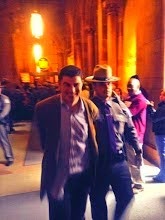
After Sawyer’s speech, we recalled names and lit candles for the dead, walking with them to the Stonewall Inn, where we held a die-in in the street. Pray for the dead, fight like hell for the living, we chanted, many recalling the years of working with the sick, analyzing data, stitching quilts, creating programs, engaging in civil disobedience, passing out syringes, building programs, defending the vulnerable. The cuts show they don't care about the poor, noted Sawyer, who took part in the die in. We have to organize the vote for healthcare. Our lives depend on it. Money for aids and health care, not ice and warfare.
About to leave, Brian, who’d taken part in the die-in, led the crowd in “Sang somewhere over the rainbow” recalling Judy, whose funeral in June of 1969, ignited the riot at Stonewall Inn.
And out we walked into a quiet Friday night, the thoughts of the vigil lingering in our minds. Out to Julius, I joined Eric and a few others. Knicks on TV, even in the oldest gay bar in New York, the whole city going crazy for the Knicks. Out to Village Works to watch the game. Dancing into the knight. Knicks in three someone chants on the way home.
The day before, Treatment Action Group posted a note:
“Forty-five years ago tomorrow, the CDC published a few paragraphs in a weekly report describing five cases of a rare pneumonia among young gay men in Los Angeles. No one reading it could have known it marked the beginning of one of the deadliest epidemics in modern history. What followed was not only a public health crisis. It was a crisis of neglect. People living with HIV and AIDS faced stigma, political indifference, and a research establishment that moved too slowly while lives hung in the balance. But the history of HIV is not simply a story of scientific discovery. It is a story of people demanding that scientific discovery serve everyone. The future of HIV research is being written right now.”
A coast away, a vigil took place in San Francisco at the Corner of Castro and Market. After the San Francisco Candle Light Vigil, Cleve Jones, who was there, after Harvey Milk was killed and activists marched from the same streets, put out the following statement:
“Dear friends,” wrote Jones:
“Forty-five years ago, on June 5, 1981, the Centers for Disease Control published the first account of clusters of gay male patients in Los Angeles and California with unusual infections apparently related to a breakdown of their immune systems. As a young legislative assistant assigned to the Health Committee in the California State Assembly, I read the report at my desk and felt a deep sense of apprehension. Four years later almost everyone I knew was dead, dying, or caring for someone who was dying. I tested positive for HIV when the antibody test was approved in 1985, and lived with the knowledge of that diagnosis for a full ten years before any effective treatments were developed. During those years most of my friends died. I made new friends, then they died. I found more friends and comrades, then watched as they also died. This went on and on and on. After a while I grew reticent to accept new attachments to friends or to lovers. Most of my community fought back, but not all. Some retreated into willful denial, subscribed to foolish conspiracy theories or embraced the quackery and pseudo-science of legions of grifters. Others lost their way to alcohol and drugs, defeated by the endless spectacle of misery and death that filled our days and haunted our nights. Some, with no one left in their lives, took their own. Many celebrated our deaths. Bumper stickers like ‘AIDS: Killing All The Right People’ were popular at conservative gatherings. Republican politicians called for us to be quarantined. In the White House and the halls of Congress they whispered loudly, ‘et them die.’ And die we did. They called it the gay plague even though the overwhelming majority of the 45 million people who have now lost their lives across the planet were heterosexual men and women and their children. They did their best to deny funds for research, education, treatment and care. The one nation on earth with the resources, institutions and wealth sufficient to slow the spread of the virus failed. We kept fighting. We marched, lit candles, lobbied, prayed, were arrested, raised millions of dollars, sewed quilts, wore red ribbons, funded research, cared for the dying and did our best to comfort the survivors. We shouted in the streets against the bigotry, racism, greed and stupidity but it felt like we were screaming into the winds of a hurricane that would surely sweep us all away. Those of us who recognized early the threat of the new disease were often mocked or abused, but mostly we were just ignored. It was painful and exhausting to witness the calamity we had predicted as it descended. Some of us survived. We lived long enough to witness yet another pandemic, and to watch with sorrow and rage as the same mistakes played out, hospitals filled to overflowing and the body count rose. We endured again a President of the United States who failed utterly to perceive the gravity of the challenge and derided those who did. Forty-five years later, when advances and innovations in medical science brought the world to the brink of victory over HIV and AIDS, we find ourselves, instead, on the precipice of a new catastrophe - an entirely preventable and unnecessary disaster which will be inflicted upon our nation and the world deliberately, by the actions of a few powerful, corrupt and epically ambitious wealthy politicians and their hidden benefactors and masters. It will take many years, perhaps decades, to rebuild what they have already decimated. And this is just the beginning. Over the coming months hospitals will close, research will stop, care will be denied, treatment will be abandoned and medical costs will soar. Across the United States and around the world, millions of innocents will die to satisfy the greed of the wealthiest few. It's Friday night as I post this in California. Families are gathering for their dinner. Theaters and restaurants and clubs will be full. Sports fans will cheer for their teams. Picnics are planned for the beach tomorrow. News of war and corruption and deceit have lost urgency to a people numbed by the daily barrage of insanity. It is deliberate, of course. The pain is the point. The chaos is orchestrated. Political division and apathy serve their purpose. They did not come to govern; they came to destroy. And within that destruction, they came to profit. The only question that remains is: will we let them do it? If we can find common ground, respect and support each other, speak truth in plain language and commit to the long struggle ahead, we can win. I tell you we can do this. We can build a healthy nation and share this world in peace with justice. Much love to you all. Be strong. Cleve.”
Like few others, Cleve’s story invited me into activism, inspiring and engaging generations of us.
AIDS activists around the country reflected on the moment. Ivy Kwan Arce, a long term member of ACT UP New York posted a note:
“JUNE 5
HIV LONG-TERM
SURVIVORS
AWARENESS DAY
45 years ago today, a brief CDC report titled “Pneumocystis pneumonia — Los Angeles” marked the official beginning of the AIDS epidemic. Today, we look back to remember those we lost—but we also look directly at the people who survived. More than 300,000 HIV Long-Term Survivors carry the profound weight of our history. They lived through a time of terror, stigma, and systemic neglect, turning grief into an historic movement for healthcare justice. To this day, HIV disproportionately impacts communities of color and members of the LGBTQ+ community. As our long-term survivors age, their medical and social needs are evolving, requiring more resource investment, not less. Honoring our history means protecting our present. Federal healthcare cuts threaten the vital lifelines that keep our community healthy and thriving. We honor the legacy of survival by fighting for the funding they earn every single day.”
After the vigil, I spoke with Ivy. “I ended planning w ACT UP and did a teach in w DOHMH which was great,” said Ivy Kwan Arce. “Reed was in it and ACT UP new members (some HIV + from the last few years ).” She followed, “the line up of speakers - had one woman - was she HIV + ? when I mention HIV + longterm I don't mean I want to speak - Tanya Walker or Michelle Lopez ....these women have contributed and survived 30 - 40 years. Michelle 's specimen is still used for research from the Y studies. Globally, women and girls account for 53% of all people living with HIV. They also represent approximately 45% of all newly acquired HIV infections worldwide…without the right dosing and formulation - the children would die just from the toxicity of the meds. - so yeah looking at the 45 years of organizing --- it is just what it is.”
It’s hard to get this stuff right, hard to organize, with enough voices, in ways to honor the moment. These are hard moments. I recall so many left behind, everyone remembers someone, Maria, who I interviewed in 1995, calling her back a week later to set up a photo for our book, only to find she’d died a few days after our interview, Fred, Dad’s best friend from college, so many left behind, the rest of us catching up with the horror.
"That was the year of the exanthemic typhus,” wrote Isabel Allende in House of Spirits, in our book group the following Sunday. “It began like any other calamity that strikes the poor but quickly took on the characteristics of a divine punishment. It was born of the poorest quarters of the city, because of the harsh winter, the malnutrition, the dirty water, and it joined forces with the unemployment and spread in every direction. The hospitals could not cope. the sick wandered through the streets with missing eyes, picking the lice from their hair and throwing them at the healthy. The plague spread to every house, infecting schools and factories so that no one felt secure." So wrote Isabel Allende, sounding very much like Camus, whose book explains the existential struggle against death and pestilence like few others. I first read the novel in 1993, devouring it as a more digestible Hundred Years of Solitude. This time, three decades later, I saw the fascism, the dark battle between autocracy and democracy, Esteban, the abusive autocrat who felt like Pedro Paramo. Clara, Blanca, and Alba who find their way, endure abuse, torture, fight, adapt. All weekend I thought about the author of Persepolis, Marjane Satrapi, who passed away at the age of 56. She "died of sadness" a little over a year after the death of her husband, Mattias Ripa, and her struggle in Iran, forced to flee, displaced, away from her family. Her grandmother, whose husband was taken during the Revolution, died shortly after she left for France. The years of sadness and exile, exile and transformation, they were many. Spent the morning with Mom, then came home, read, rode to the beach, a little drizzle, met my buddies in book group to discuss the house of spirits. We read the Origins of Totalitarianism earlier in the year. I hadn't thought of Isabel Allende's story as a narrative of displacement. Yet , she was forced to flee after her uncle was killed on September 11, 1973. Off to Venezuela, where the wrote to her grandfather, telling him she would never forget the stories she heard at his table with her aunt and grandmother, her models for Clara. And then off to the Bay Area. Displacement would be a theme of many of her novels, including displacement as a theme in A Long Petal in the Sea, another we read in book group. The books meander through my mind, like the chatter I hear from mom when she's asleep, more awake in her sleep, her mind still rumbling.
The poems were everywhere all week.
On Saturday, Anne invited us to Siempre Verde where we read poems, majestic heartbreaking poems about Palestine. I read Wild Dreams of a New Beginning, thinking about the chaos about us, the strange dreams the night before, lost shoes, strange happenings, a trip to jail, a peculiar feeling reminding me. My mind trailed off, thinking of Marjane Satrapi.
Colin talked about Choking Victim and Sascha and Bernie and Bernard Goetz. And we ran into Susan, who talked about the garden, and Mom and I sat in her garden, before the storm, strange rumblings about us. And I thought about the poem Colin read earlier by Gary Snyder:
"I went into the Maverick Bar
In Farmington, New Mexico.
And drank double shots of bourbon
backed with beer….
I recalled when I worked in the woods
and the bars of Madras, Oregon.
That short-haired joy and roughness—
America—your stupidity.
I could almost love you again.
We left—onto the freeway shoulders—
under the tough old stars—
In the shadow of bluffs
I came back to myself,
To the real work, to
“What is to be done.”/;’
It had been that kind of a week, thinking about Gary Snyder as Japhy, the mountaineer in Kerouac's 1958, The Dharma Bums.
June is seared in mind, the 4th, the anniversary of the Tiananmen Square Massacre and the '89 Democracy Movement.
Thursday, we biked out to the water.
Brad invited us to the poets afloat reading at portside.
Up Sackett Street we rode down Van Brunt to the water. Aboard a ship, Brad was there to greet us, amidst the docks, piers, water, reflections, light flickering, sun on the water, meandering tides. Brad conjures Walt's tales of voyaging, voyaging, voyaging, through the nooks and crannies, the dark corners of this, our city of orgies; poet after poet read tales of our archipelago of a city, seals converging free, Newtown creek, a biodisaster of pollution, chemicals in the water, ExxonMobil still won't pay, condos rising along the Gowanus, spelled with an anus, full of affordable housing no one can afford; a song of a salty vessel fills the air; we we find our freedom together, riding train to the end of the line, to water, return to the flow, biking across a bridge, to a tributary, from eerie basin to buttermilk channel, a multilayered rhythm, back through red hook, poets afloat... always a coffee shop connection, says Brad, reminding us to greet the poets along scribbling notes, contemplating infinity, light rippling in the water, looking at the statue of liberty, stories of immigrants, about us, redeeming us, keeping us vital, a poet from Taiwan recalling a cousin Kevin, remembering the mornings before school, before the bus, remember our backpacks. what do I write about, the people I know, the family, clearly all this seawater is getting me existential, brad confesses, hugs coming in to take me from the dock, at pier 17 backpackers jazz and joggers, pipes mad, a ghostly national anthem, sone stand before the k icks game like uncle bruce used to do, saluting the tv, dad laughing, Miranda dreaming, recalling warm bodies, the wind cries, reminds me i'm alive, robins sick,so Miranda reads about Jamaica Bay birds flying about, impossible not to think about the climate catastrophes, looking at the water, the other boat sailed around the world? taking g me with it, looking out, about on a windy afternoon, a guy singing a sea shanty about pirates, singing about philosophy. Monuments make ideas easier to recycle, says Miranda, lesbian poets confess they are still taken with Pride month, lost notebook, into oblivion, there with Reinaldo's lost drafts of before night falls, confiscated in a Cuban prison, Persepolis now and forever; Alexandra invites us to an art show on 3rd, we ride down Union, through the Gowanus, new buildings city on top of city, dreams about us, where crowds screamed for the Knicks the night before...
June 8
Here's to immigrants, said Janat Namirembe Mutebi (Computer Engineering Technology) the valedictorian at City Tech (New York City College of Technology) Class of 2026 at the college's 86th Commencement Exercises at Barclays Center. The whole talk of the city was Trump is coming to the game, ruining the party that's the Knicks epic playoff run, falling to the San Antonio Spurs 115-111 in Game 3 of the NBA Finals at Madison Square Garden. This marked their first loss in exactly 46 days, since losing to Atlanta on April 23. No one wanted Trump in town, tarnishing this moment. Still a good vibe in the streets, people our eating burritos in the street at St Marks Place, watching the game, all over the city. Go Knicks!!! Knicks in five, stay alive!!!


.jpg)


No comments:
Post a Comment